
Solutions / Guides / Installer Parts Ready Stock in Yangon — Before the Job Day
Job day is the wrong day to discover empty shelves.
Installer Parts Ready Stock in Yangon — Before the Job Day
For: Myanmar installers and technicians who need parts before job day

Job day is the wrong day to learn the membrane is not on the shelf.
Installers and technicians in Yangon already know this feeling: the van is loaded, the client is waiting, and the one part that makes the job possible was never actually confirmed — it was assumed. A clean install plan dies fast when RO spare parts Yangon stock was never checked, the wrong housing size arrives, or the photo-only seller who sold the original machine has gone quiet by 7am.
This guide is about one discipline that saves every other part of the day: confirm ready-stock and the parts list before the van leaves, not after.
It applies whether you sell for AQUAPOLAR, install for a third party, or simply help a family member sort out their machine on a weekend — the check itself does not change with who is holding the toolbox.
WHO/UNICEF JMP framing treats safely managed drinking water partly as water that is available when needed. An install that stalls for missing parts fails that test for the owner on the day they expected water. Against Myanmar’s unfinished WASH coverage — about 60% safely managed drinking water in 2024 (JMP-linked SDG 6 Data / UN-Water) — ready-stock confirmation is part of the job, not a nice-to-have.
The van-is-loaded moment
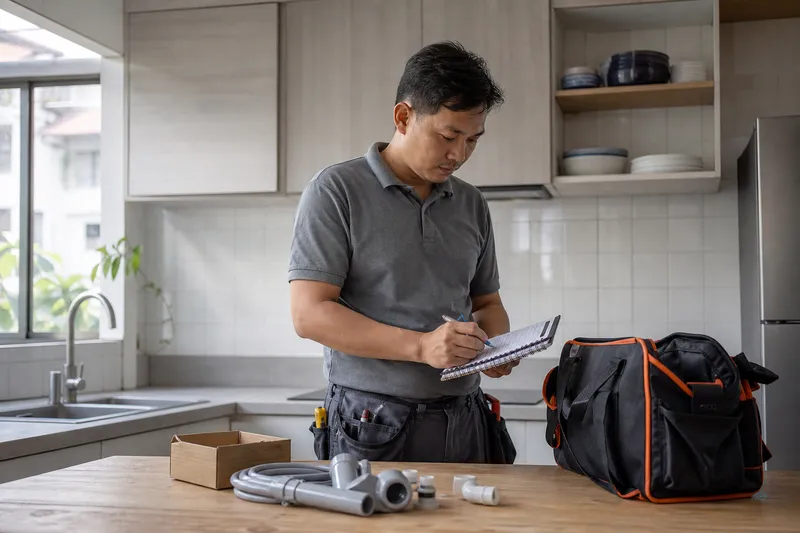
You arrive on site with a schedule to protect. The owner shows you a machine bought from a Facebook page eight months ago — no invoice with part numbers, no memory of the class, just "it's the RO, it's somewhere around 400 something." You open the housings and discover a membrane size that does not match what you brought.
Now the day has two bad options: drive back for parts and lose the slot, or improvise with the wrong size and leave a problem for the next visit. Neither protects your time, your fuel, or your name with that client.
This is not a rare edge case. It is close to the default outcome any time the parts check happens on site instead of before the site visit, and it repeats across installers, sellers, and job types with almost the same shape every time.
Why installers get burned
- The owner bought a Facebook machine with no parts map and no record of what is actually inside it
- The job sheet says "RO" without a class name or housing sizes attached
- Someone on the team assumes "Yangon always has it" without sending a single message to confirm
- Peak season hits and every installer in the city is calling the same supplier on the same morning
Owners experience this failure as slow water and a missed appointment. You experience it as a wasted trip, a burned afternoon, and a dent in a reputation you built over years, not days.
None of these four causes are unusual. They are the normal way Yangon jobs go sideways when the parts check happens on site instead of before the site.
Hub pages: Spare parts · Ready stock · Supplier. If the end-user themselves needs a reorder habit rather than a one-off job, point them to RO spare parts reorder.
What to lock before job day

- Machine class and housing reality — a photo of the labels beats a guess from memory, every time
- Parts list — membranes, PP/CTO/UDF/post-carbon exactly as fitted, not a generic BOM copied from a different job
- Stock confirmation for *this* week's job — claim-safe, checked per enquiry, not assumed from last month's availability
- Who receives the message if something needs a second visit after install
- Site constraints — space, drain, pressure — so class decisions are not being improvised on site under time pressure
If the site is actually a shop or a small kitchen that has already outgrown a home-class sticker, route the buyer to commercial when home class fails instead of quietly forcing another undersized install to "make the job work today."
None of these five checks take long individually. Together they are the difference between a job that finishes on schedule and one that generates a second visit nobody budgeted for.
Ready stock is a conversation — not a permanent blog fact
We deliberately do not publish live warehouse counts as eternal website facts, because stock changes by the week and a stale number is worse than no number. What we do offer is a Yangon path to ask directly: ready stock · Viber · showroom.
That habit is the opposite of photo-only buying, and it applies to installers just as much as it applies to homeowners — see showroom vs Facebook-only for the buyer-side version of the same discipline.
A confirmed answer this week is worth more to your schedule than a permanent-sounding promise that may already be out of date by the time you read it.
A morning that goes right instead
Contrast the earlier scene with this one: two days before the job, you send photos of the existing housings on Viber, along with the job date and township. You get back a confirmation of what is in stock and a heads-up that one item needs a day's lead time. You plan the route around that, arrive with the right parts already in the van, and the visit takes the time it was supposed to take.
Nothing about that morning required luck. It required two days of lead time and one message sent before the van left the yard.
Why seasonal timing multiplies this risk
Filter and membrane demand is not flat across the year. School term openings, hot-season drinking spikes, and festival weeks like Thingyan all push more households and shops toward service visits in the same short window. If every installer in Yangon waits until the morning of the job to confirm stock, the busiest weeks become the exact weeks when parts run short — not because supply disappeared, but because everyone asked on the same day.
Booking your stock check even a few days ahead of a known busy period is a small habit that avoids a predictable bottleneck, rather than reacting to it after the fact.
What "claim-safe" actually means for a stock conversation
Claim-safe does not mean vague. It means we will not print a permanent number on a page that changes weekly, but we will give you a real, current answer when you ask for your specific job. The difference matters: a stale "always in stock" claim on a guide page helps nobody when it turns out to be wrong on the one day it matters, while a same-week Viber confirmation is something you can actually plan a route around.
If a part needs lead time, we will tell you that too, rather than let you find out standing in front of an open housing with the client watching.
Message template for installers
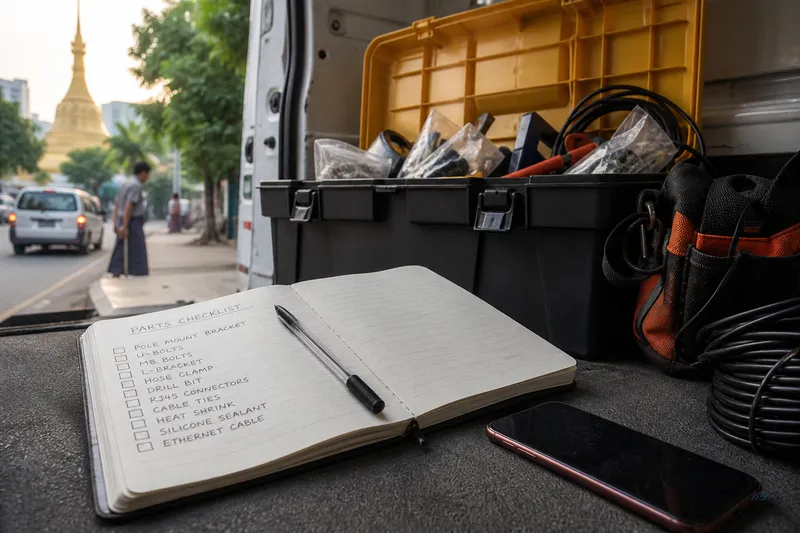
Send:
- Job date and township
- Photos of the machine and any visible labels
- The parts you already know you need, or "identify from photos" if you don't
- Whether the owner also needs class advice — home versus light commercial
- Pickup versus delivery expectation — ask directly, do not assume either way
Viber 09668896889 · Get Quote · Showroom
Send it as early as you can. Even a same-day message before the van leaves the yard is better than confirming nothing at all.
Cost of skipping the check

- A callback trip with no parts to actually fix anything
- The owner buying the wrong filter in a panic between your first and second visit
- You absorbing the blame for a seller who never stocked locally in the first place
- The next job going to whoever answered the group chat faster than you did
- A second wasted trip if the replacement part also turns out to be wrong, because nobody photographed the housing the first time
Local trust is not separate from the install product — it is part of what you are actually selling alongside your labour.
How this helps the owner too
When you confirm parts early, you also force a healthier conversation with the owner, one they may not have had with whoever sold them the machine:
- Is this still a home-class unit being asked to handle a shop-level rush?
- Do they understand GPD as a class name, not a daily gallon promise?
- Do they actually know who to message after you leave the site?
Answering those questions reduces callback chaos later and protects two reputations at once — yours, and AQUAPOLAR's local support path, which you are effectively representing on site whether the sale went through us or not.
Some owners will not have thought about any of this until you ask. That is normal, and it is a useful moment: you are not just fixing a machine, you are handing them a habit — checking parts before they run dry — that will save their next three service visits, not just this one.
Related
Ready before the van leaves?
Confirm the parts list. Confirm the stock path. Then install — so job day is about finishing the water job properly, not improvising around empty shelves.
Two days of lead time is usually all it costs to turn a stressful callback into a routine visit.
Message on Viber, request a quote, or take the showroom / ready-stock path.
Related products
Next step
Ready to talk through fit for your home or site? Message on Viber or request a quote.
More guides: Solutions guides