Projects / Guides / What to Prepare Before Requesting an Industrial Water Treatment Proposal
We need a water treatment system" is not a design input.
What to Prepare Before Requesting an Industrial Water Treatment Proposal
For: Factory owners, facility managers, project engineers and contractors in Myanmar
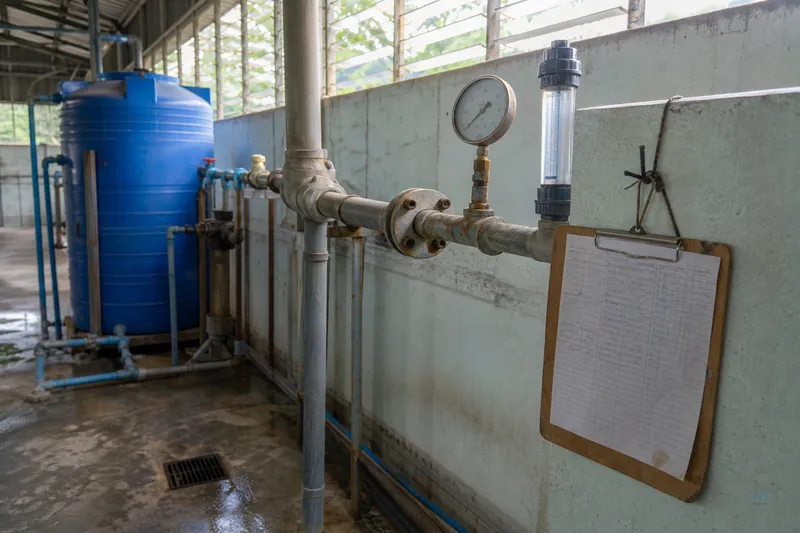
A useful industrial water-treatment proposal needs more than a requested capacity. Prepare the source-water condition, the water use, the required quality, average and peak demand, operating schedule, site utilities and space, existing treatment, discharge context and any available test results before equipment selection begins.
This guide is the information list. Not a system recommendation — because nobody can responsibly recommend one before reading the list.
Why "we need a water treatment system" cannot be designed
That sentence contains no design inputs. Two factories can request the same daily volume and need entirely different solutions, because the deciding variables are upstream of volume: what the water is, what it must become, and how unevenly it is drawn.
Myanmar project activity is real and current. A May 2026 official report records new projects across industry, hotels, food-related manufacturing, pharmaceuticals and other sectors (Ministry of Information). That tells us the demand exists. It tells us nothing about what any individual factory needs — including yours. Project activity is context, not a specification.
So the honest sequence is: qualify, then propose. A supplier who sends a full treatment train and a price before reading your source-water condition is guessing with your capital.
Source-water information
Everything downstream depends on this. Write down what you know and mark clearly what you do not.
Source type and variability
- Borehole, municipal tie-in, surface water, tanker delivery, or a combination
- If multiple sources: which is primary, which is backup, and how you switch
- Supply reliability — continuous, intermittent, or scheduled
- For zone sites, verify the supply information published for your specific park or estate rather than assuming. Mingaladon Industrial Park, for example, publishes site-level water-supply information (source). Treat that as an illustration of the kind of input to confirm for your site — never as a figure that transfers to another location.
Available raw-water test results
- Any laboratory analysis you already hold, including old or partial reports
- Sampling date and which source each sample came from
- In-house readings you take routinely, if any
An imperfect two-year-old report is more useful than nothing, provided you say it is two years old. What is not useful is a confident verbal description of water nobody measured.
Seasonal changes and known problems
- Monsoon turbidity and colour change
- Dry-season drawdown, falling yield, or rising hardness
- Iron, manganese, salinity or odour complaints from operators
- Anything that already damaged equipment or forced an unplanned shutdown
Water-use and target-quality information
One factory rarely needs one water quality. Map use by stream.
- Production or process use — water that becomes part of, or directly touches, the product
- Boiler feed — where scaling and carryover drive the requirement
- Cooling — where cycles of concentration and fouling matter
- Cleaning and washdown — including clean-in-place routines if you have them
- Ingredient water, where applicable
- General utility and sanitary use — usually the least demanding
Then the decisive question: what quality does each stream actually have to meet, and who set that number? A customer specification, a process engineer's requirement, an equipment manufacturer's feed-water limit, and an authority requirement are four different sources of truth. Name which one applies to which stream.
If nobody has set a target for a stream, say so. An undefined target is a project risk to resolve, not a blank to fill in with an assumption.
Demand profile
Capacity failures are usually profile failures.
- Average daily demand, and how you arrived at the number — metered, calculated, or estimated
- Peak hourly demand — the worst realistic hour, not the comfortable average
- Operating hours and shift pattern, including weekend and seasonal differences
- Storage strategy — existing tank volume and whether storage can absorb peaks
A plant sized on daily average and no storage strategy will disappoint during the exact hour it matters. Peak-hour behaviour is the single most common gap in the project data we receive.
Site and utility information
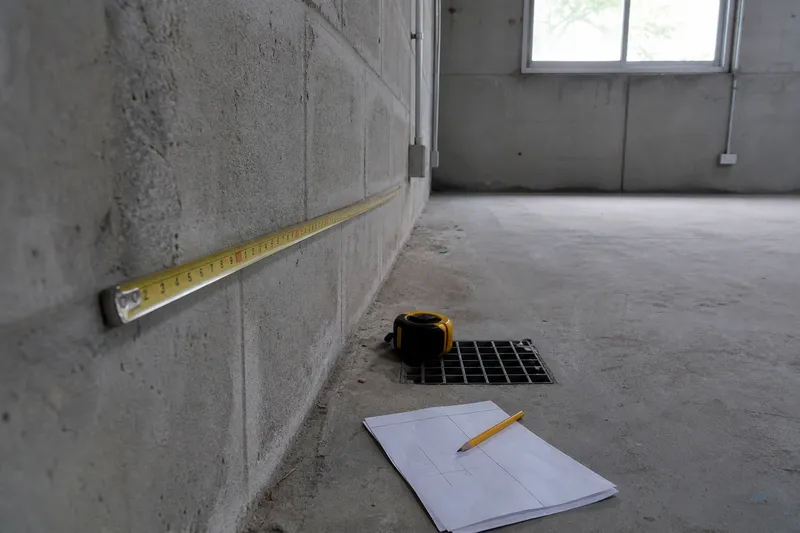
- Available footprint for the treatment area, measured — including height clearance
- Access route for delivery and installation, and clearance for later servicing
- Power availability, phase, and backup arrangement
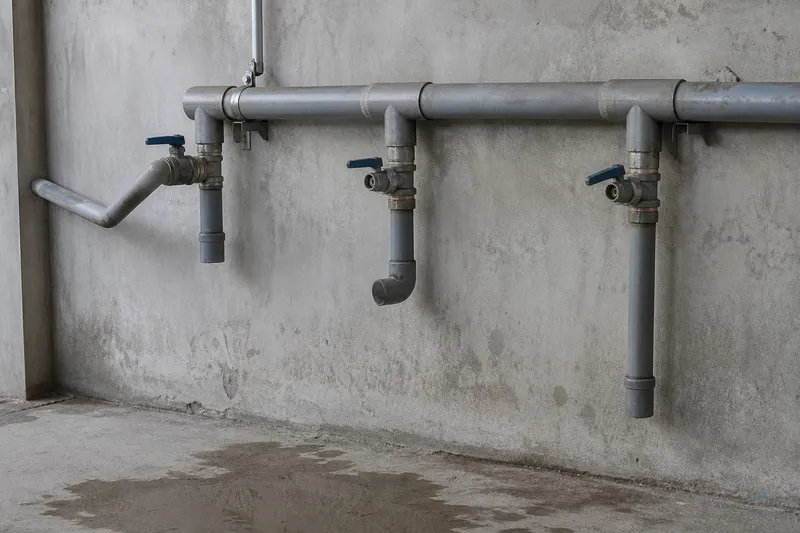
- Feed pressure at the intended connection point
- Drainage and reject-routing possibility, with a real route
- Existing tank arrangement, positions and levels
- Floor condition and load capacity where equipment will sit
Space and access constraints eliminate otherwise sensible configurations. Better to discover that with a tape measure than with a delivery truck at the gate.
Existing system and failure history
If something is already installed, its history is evidence.
- What is installed now, roughly when, and by whom
- What it was supposed to achieve versus what it delivers
- Failure and complaint history — scaling, fouling, membrane life, pump trips, taste or odour complaints
- Consumable and service reality: what gets changed, how often, and who does it
- Whether any performance data or logs exist
Recurring failures usually point at pretreatment or an unrealistic duty, not at the last component that broke. That distinction saves real money.
Process water, wastewater and discharge
This is a boundary section, and we keep it a boundary deliberately.
Myanmar's National Environmental Quality (Emission) Guidelines cover projects that generate direct or indirect discharges of process water, wastewater from utility operations, or stormwater (UNEP LEAP index). If your project creates any of those streams, discharge belongs in the project conversation from the beginning — not after equipment is chosen.
What we will not do on this page is interpret those guidelines for your specific factory, tell you which limits apply to your process, or imply that any arrangement guarantees compliance. Discharge questions get routed to the qualified project team, together with your consultant or the relevant authority. That routing is the correct answer, not a deflection.
What helps us route it well:
- Which streams your process will actually generate
- Whether a discharge point, sewer connection or treatment obligation already exists
- Any requirement already given to you by an authority, consultant or customer
- Whether an environmental assessment or permit process is underway
The one-page project brief
Bring this on a single page. Incomplete but honest beats complete but invented.
- Site — township, zone or estate name, site type, measured available space
- Source water — type(s), reliability, and test-result status per source
- Use streams — production, boiler, cooling, cleaning, utility, with quality target and who set it
- Demand — average daily, peak hourly, operating hours, existing storage
- Utilities — power, feed pressure, drainage route, tank arrangement
- Existing system — what is installed, what fails, who services it
- Discharge — streams generated and any existing obligation
- Unknowns — an explicit list of what has not been measured yet
- Timeline and decision process — who signs off, and by when
Item 8 is the most valuable line on the page. A clearly labelled unknown gets scheduled for investigation. An unlabelled assumption gets built.
How AQUAPOLAR supports qualification
AQUAPOLAR helps the customer organize project inputs, review the technical requirement, identify what information is missing, and coordinate a suitable solution-planning process.
Equipment and capacity are proposed only after qualification. There is no universal design here, and we will not present one.
What that looks like in practice:
- We read your brief and tell you which inputs are missing or internally inconsistent
- We identify which streams need a defined quality target before anything can be sized
- We discuss equipment class options once source water, demand and site are known
- We coordinate the technical follow-up, including corrections when something needs rework
- Larger or process-critical scope moves to engineering and projects with qualified follow-up
What we will not do:
- Recommend RO, ultrafiltration, softening or UV for your factory before project data exists — that is a qualification-required decision, not a web-page decision
- Publish a treatment diagram implied to fit your site
- Guarantee compliance, discharge approval, or a fixed outcome before qualification
- Present other companies' announced projects as our customers or case studies
Real project cases appear only where they have documented approval: project cases.
If your project is a different shape
- Bottled or packaged drinking water for sale — the approval and documentation path is different: Myanmar bottled water factory approval preparation, and bottled water factory first questions for site truth
- Hotel, restaurant or commercial kitchen scale — start at commercial RO and the hotel and restaurant peak service guide
- Equipment browsing after qualification — RO systems, UV sterilizers, spare parts
Sending an industrial project down a commercial-product path, or a light-commercial need down a project path, wastes weeks on both sides.
Send your project details
Send what you have. We will tell you what is missing rather than quote around the gaps.
- Source-water report or "not tested yet"
- Intended use streams and any quality specification you were given
- Target output, peak hour and operating schedule
- Site location, measured space, and photos or a layout sketch
- Existing-system information and failure history
Viber 09668896889 · Send project details · Facebook message · Insein showroom · Engineering solution
Related
- Projects and engineering — project qualification and follow-up
- Engineering solution · Commercial RO
- Project cases — documented cases only
- Water factory — for bottled and packaged drinking water applications
- FAQ
Ready to be qualified properly?
The factories that get useful proposals are not the ones with the biggest budget. They are the ones who arrive with source water, a peak number, a measured space, and an honest list of unknowns.
Message on Viber, send your project details, or visit the showroom in Insein, Yangon.
Review note: this page is reviewed annually, and whenever Myanmar project or environmental requirements, or the AQUAPOLAR service scope, change. External requirements must be verified against the official source at the time of your project.
Related solutions
More guides: Projects guides