Solutions / Guides / Bottled Water Factory — First Questions Before Equipment
Tender PDF ready. Site questions missing.
Bottled Water Factory — First Questions Before Equipment
For: Myanmar buyers planning drinking / bottled water factory equipment
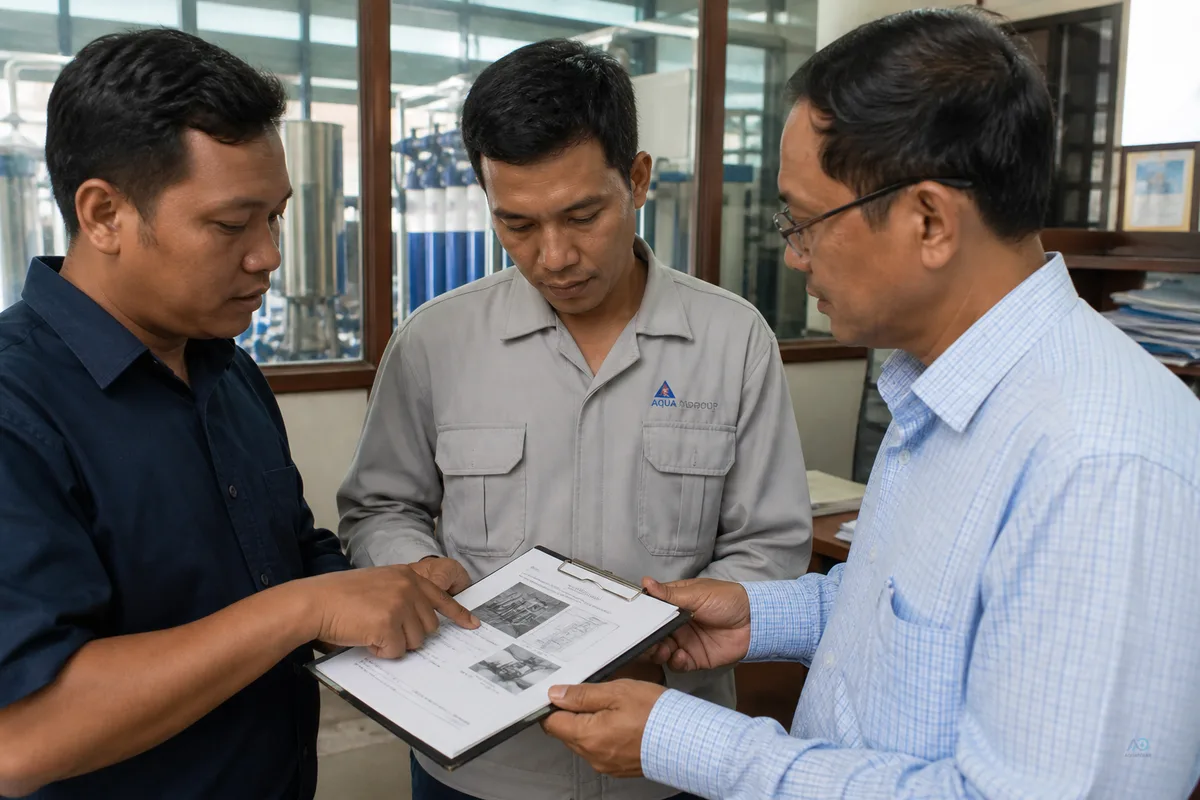
“Bottled water factory equipment Myanmar” searches should not dump you on a home RO page.
They also should not dump you into a fake turnkey PDF with invented tonnes-per-hour and a complete BOM nobody measured on site.
This guide is about one order of operations: questions first, equipment class talk second, engineering follow-up third.
WHO/UNICEF JMP framing for safely managed drinking water looks at whether water is accessible on premises, available when needed, and free from priority contamination — a service and process standard, not a glossy equipment brochure. Myanmar’s 2024 JMP-linked SDG 6 estimate for safely managed drinking water sits near 60% (UN-Water / WHO–UNICEF JMP). Factory buyers feel that gap as market opportunity and as pressure to build something that survives real feed water, peak filling days, and operator discipline — not a Facebook plant package that collapses on first monsoon turbidity.
Why this page exists
Website guides here are not blog filler. This URL exists to:
- Rank local factory intent — buyers searching bottled water factory equipment Myanmar before steel is ordered
- Answer the GEO question — “What should I ask before anyone quotes a plant?”
- Move a serious buyer toward Water Factory and engineering / projects with a claim-safe brief
- Stop tender theatre — pretty BOMs without site truth waste months and concrete
If your job is a tea shop that outgrew a home RO sticker, open commercial when home class fails instead. If UV and RO got mixed in one Facebook chat, read UV vs RO what to ask. If you are planning a filling line and nobody has written feed-water facts yet, stay here.
Why tenders fail before steel arrives

A pretty equipment list without site truth creates:
- Wrong capacity class for peak filling days
- Power and drain fights after concrete is poured
- UV and RO mixed as synonyms — UV vs RO what to ask
- No operator or spare-parts plan after commissioning
- Facebook “plant package” prices that cannot survive a real feed-water conversation
Picture a Yangon outskirts plot where the buyer already paid a consultant for a turnkey PDF. Filling day one arrives. Peak demand was copied from a brochure, not measured. Drain routing was “TBD.” Feed water was never tested — only assumed “borehole is fine.” The steel is real. The regret is real too. That is not bad luck. That is missing questions in the wrong order.
Intent page: Bottled Water Factory Equipment · Engineering / projects · Engineering solution.
First questions (before any BOM fantasy)
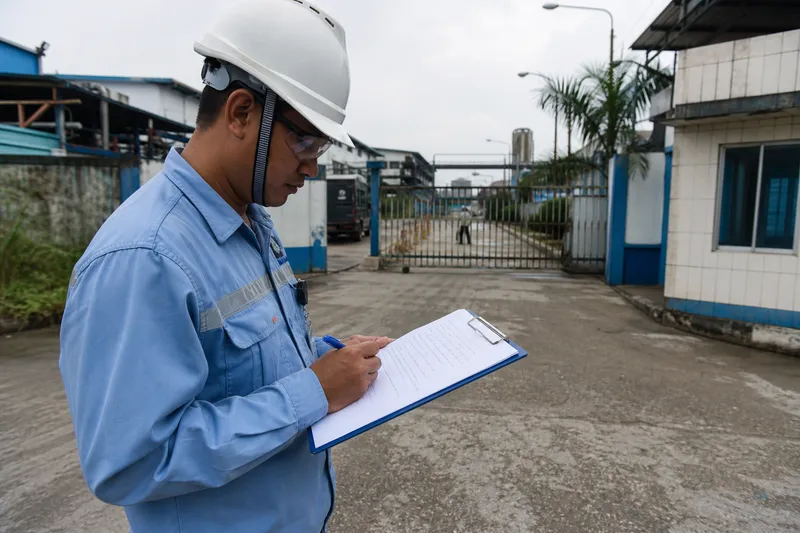
Ask these in writing — even if a tender already exists:
- Target daily / peak production class as a planning range — not a website guarantee
- Feed water source and known issues (what you already tested vs what is still UNKNOWN)
- Filling / bottling plan — what you own vs what you still need
- Power, space, drain, discharge constraints on the real plot
- Who operates and who reorders RO / UV / filters after startup
If someone refuses these questions and only pushes a PDF, you are buying theatre.
Question #1 is not “pick the biggest sticker.” It is peak vs average intent written as a range — busy season, promo runs, export trial batches. Question #5 is where many Yangon projects quietly fail: nobody is named to reorder membranes, swap pre-filters, or service UV sleeves after the commissioning photo is posted.
Feed water — tested, honest, or still UNKNOWN
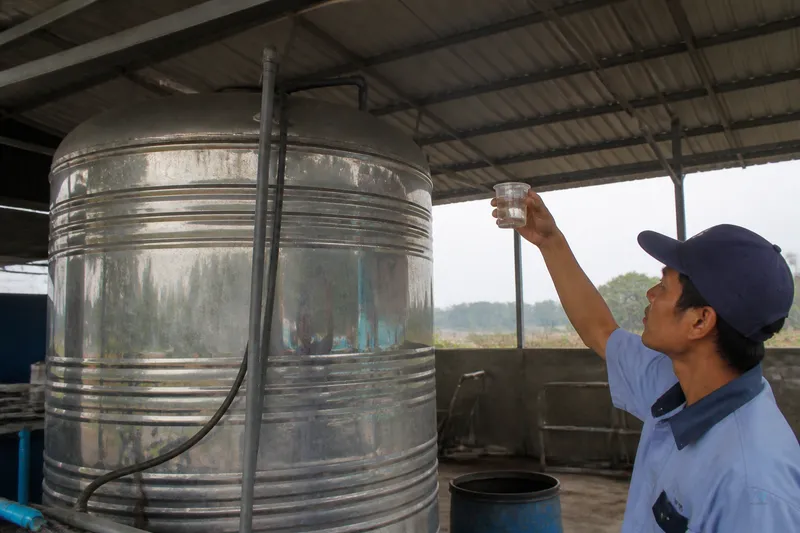
Feed water is not a footnote. It decides pretreatment class, RO class conversation, and whether a disinfection step belongs in the sequence — see UV sterilizers as a step discussion, not a replacement for membrane design.
Three honest states:
- Tested — you have numbers or lab notes someone can read (even if imperfect)
- Partially known — source identified, testing planned with a date
- UNKNOWN — still acceptable only if you label it UNKNOWN and budget for investigation before locking steel
Monsoon turbidity, iron, hardness, and intermittent municipal supply show up differently on an industrial fringe plot versus downtown Yangon tie-ins. We will not invent your feed-water story on this page. We will ask you to stop decorating a tender until the source line is honest.
What belongs on commercial vs factory paths
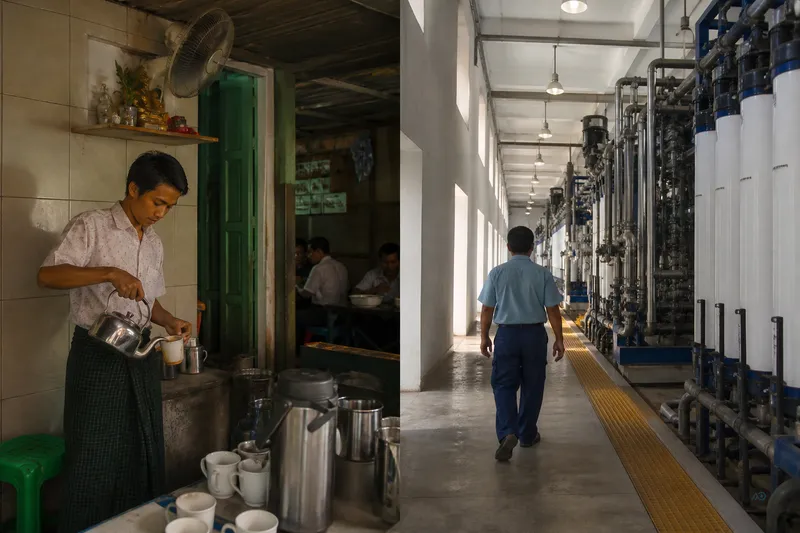
Light commercial kitchens and shops that outgrew a home sticker belong on Commercial RO — not on a factory BOM.
Hotel and restaurant peak service: hotel/restaurant peak guide.
Factory and plant equipment talks stay on water factory with engineering follow-up — projects.
The mistake is forcing a home or light-commercial sticker upward forever because “it worked at my cousin’s shop.” Filling lines, bottle washers, and plant-room utilities are a different discipline — closer to engineering than to a Facebook home RO post.
Plant talk without invented numbers
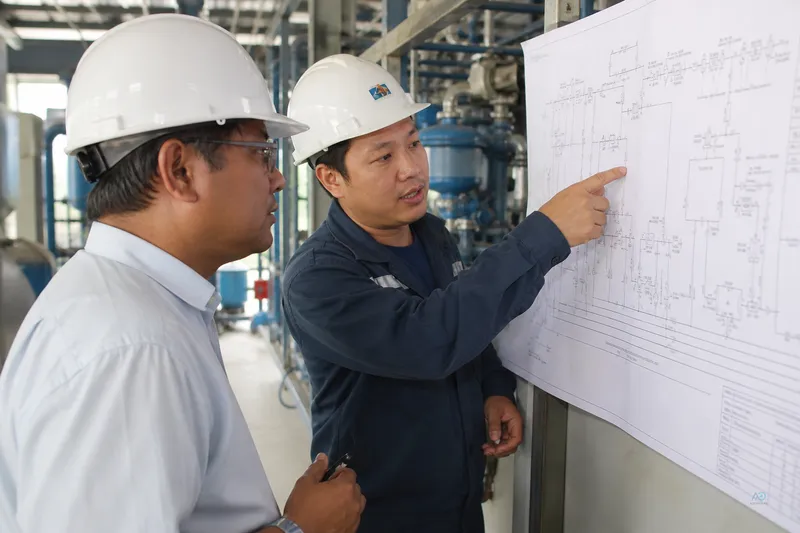
When site questions exist, equipment class talk can start — RO classes, pretreatment steps, UV as a defined disinfection class in sequence, filling equipment you still need versus what you already own.
What we will not do on this page:
- Publish a full plant BOM as if it were your site
- Guarantee TPH / GPD plant output from a class name
- Run fake case studies without documented approval — see projects
- Promise “turnkey in two weeks” without plot, power, and feed-water facts
Reminder: RO GPD labels and UV wattage labels are capacity class names, not a website promise of daily plant litres. Real throughput depends on feed water, pretreatment, install, and how hard you run peak filling.
Spare and supply path still matters after commissioning: spare parts · supplier · ready stock · RO spare parts reorder Yangon.
Claim-safe rules we will not break here
- No invented full plant BOMs on this page
- No guaranteed TPH / GPD plant output as a website fact
- No fake case studies without documented approval — see projects
- UV may appear as a disinfection step discussion; it is not “a small RO” — UV category
- No disease-cure or “100% pure” marketing language — process fit and site discipline only
How to start without wasting a week
Send a short brief:
- Township / site type (industrial zone, outskirts plot, existing building retrofit)
- Planning capacity class goal (range — peak vs average)
- Feed water notes (or “not tested yet”)
- Filling plan status (owned / sourcing / unknown)
- Whether you need supply talk, consult, or both
Viber 09668896889 · Get Quote — water factory · Showroom · RO systems for equipment browsing only after questions exist.
What “good enough to talk equipment” looks like
You are ready for equipment class talk when:
- Peak vs average production intent is written down as a range
- Feed water is either tested or honestly marked UNKNOWN with a plan to test
- Space/power/drain constraints are acknowledged, even if incomplete
- Someone is named for operations and spare reorders
If those four are missing, any BOM is decoration. Ask the questions first — that is the commercial discipline behind water factory.
Buying discipline applies here too: buying RO by price only and local support vs one-time seller — at plant scale the regret is louder.
Related
- Water factory solution — primary keyword hub
- Myanmar bottled water factory approval preparation — FDA pathway and project documentation before E-Submission
- Industrial water treatment project brief — when the project is process water, not bottled product
- Commercial RO
- Engineering
- UV vs RO what to ask
- FAQ
Ready to ask before the PDF?

Stop decorating a tender with unverified stickers. Answer the site questions. Then talk equipment class with a Yangon-reachable AQUAPOLAR path.
Message on Viber, request a quote, or visit the showroom.
Next step
Ready to talk through fit for your home or site? Message on Viber or request a quote.
More guides: Solutions guides