Solutions / Guides / Antiscalant Overdose Can Fouls Membranes Too — Plant Ops Balance
Too little scales. Too much also fails.
Antiscalant Overdose Can Fouls Membranes Too — Plant Ops Balance
For: Water factory and industrial RO operators, plant engineers, and service teams in Myanmar
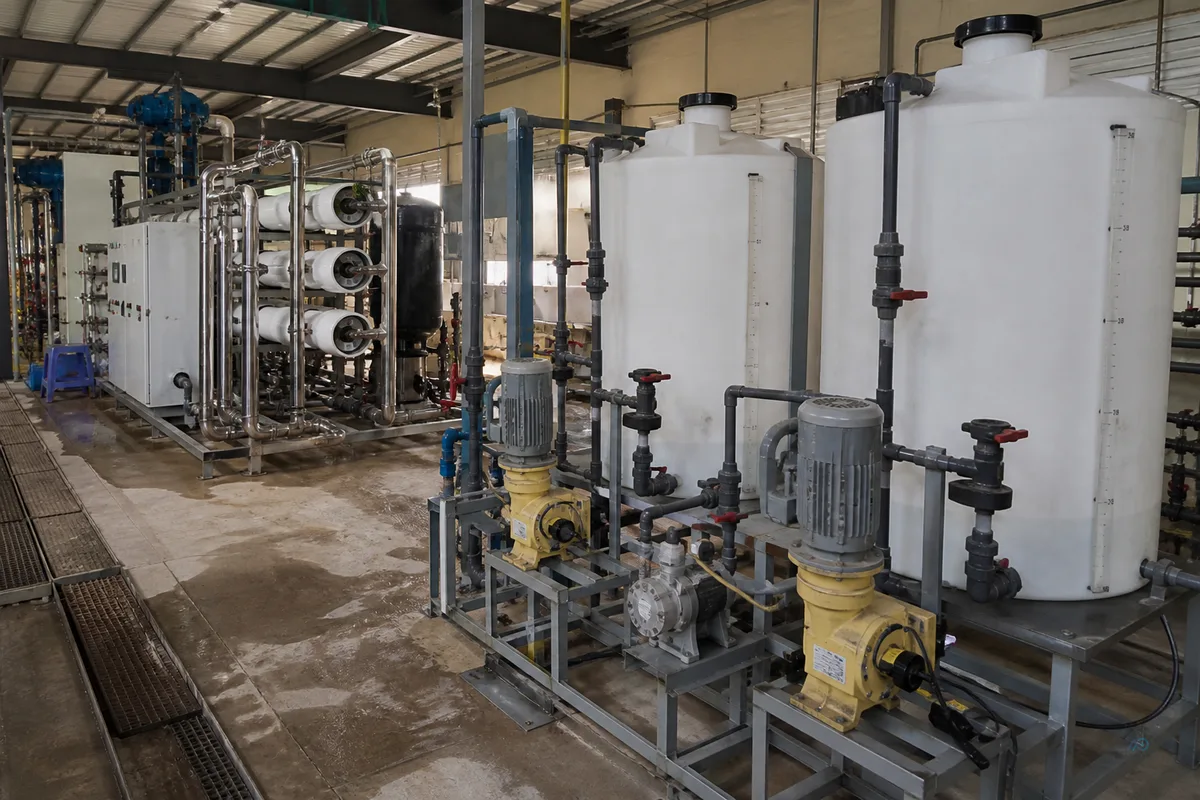
Plant operators learn early that underdosing antiscalant invites scale on RO membranes — pressure climbs, normalized flow falls, chemical cleans multiply.
The mirror mistake gets less Facebook airtime: overdosing antiscalant can also foul membranes — sometimes with calcium–antiscalant deposits that behave differently from classic hardness scale on the same log sheet.
This guide is for factory and plant ops — bottled lines, industrial RO, multi-stage pretreatment — not home under-sink shopping. No invented ppm targets on this page. Only balance, monitoring, and honest boundaries.
Two failure modes, one rushed knob
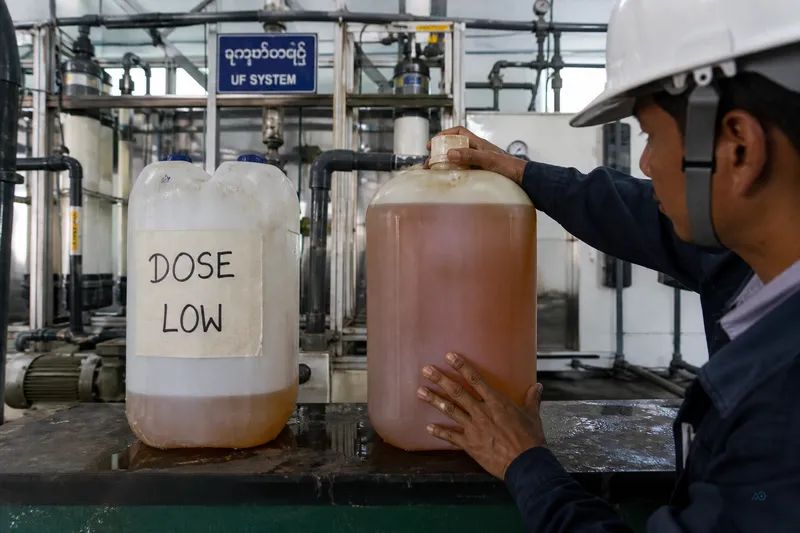
Picture a night shift outside Yangon. Feed hardness drifted up after monsoon switch-over. Normalized differential pressure trends wrong. Someone bumps the antiscalant pump “until it looks safer.”
Weeks later, performance still will not stabilize. The clean-in-place recipe that worked last season looks lazy. Membrane autopsy language mentions gel-like foulant or antiscalant-related deposit — not the chalky scale story ops expected.
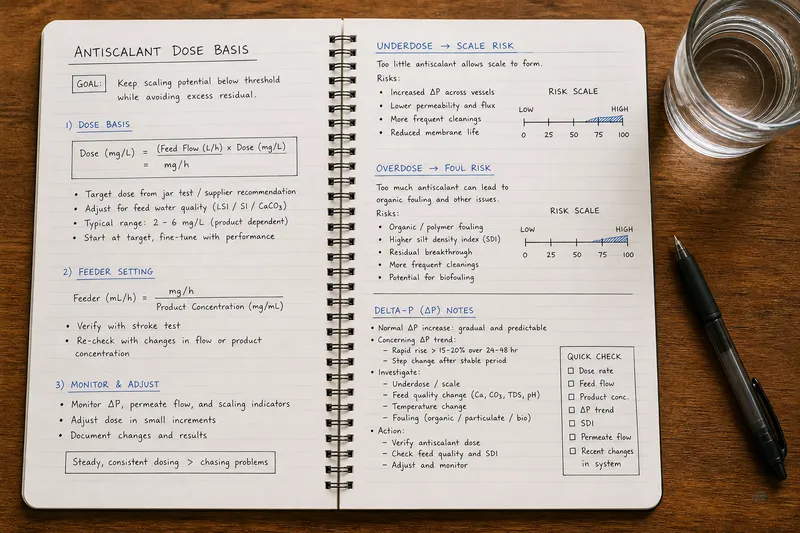
Both extremes share a root cause: dosing divorced from measured feed chemistry and verified pump output.
Underdose → scale-friendly supersaturation on the membrane surface.
Overdose → antiscalant chemistry can interact with hardness ions and form deposits that still choke flow — a fouling path, not a marketing slogan.
What to monitor before touching the pump

Strong ops teams treat antiscalant as a closed loop, not a superstition:
- Feed water analysis cadence — hardness, alkalinity, iron, SDI or turbidity where relevant — dated and sourced
- Pump verification — stroke, suction level, air lock, dilution ratio, batch mix errors
- Normalized performance — DP, flow, conductivity rejection trends — same math every week
- Pretreatment health — media exhaustion and cartridge blind spots upstream of the dose point
- Seasonality — monsoon raw change, borehole blend switches, tank stagnation after holidays
- CIP history — what worked, what worsened fouling, membrane age and warranty context
If analysis is stale, the dose knob is a guess — high or low.
AQUAPOLAR will not publish universal dose rates here. Product selection and injection setpoints belong in site-specific qualification with your water treater, chem supplier, and membrane OEM guidance — not a screenshot forwarded in Viber.
Symptoms that should trigger review — not panic posts
Document patterns ops can describe without inventing cures:
- Rising DP with stable feed hardness on paper → suspect fouling type change, biofilm, or antiscalant path
- Falling rejection with modest DP rise → ask about O-ring bypass, instrument drift, temperature
- Repeated CIP “success” followed by fast decline → ask overdose, incompatible cleaner, or pretreatment slip
- New antiscalant brand with no pump recalibration → treat as a change-control event
Greenfield plants and brownfield retrofits both fail when dosing skids are commissioned before feed variability is measured — bottled factory preparation.
Change control when chemistry or source shifts
Myanmar factories commonly switch:
- Municipal to borehole make-up mid-dry-season
- Sand filter media after overdue change-out
- Antiscalant SKU when import timing forces substitution
Each switch deserves a written line in the log: date, reason, who approved, what normalized baseline was before change.
Water factories planning FDA-facing documentation should align chemical control narratives with actual ops records — not brochure ideals — approval preparation.
Home RO buyers — wrong room
If you are a Yangon apartment buyer comparing RO Machine 400GPD housings for morning bottles, this is not your page. 400GPD is a capacity-class name for home/light-duty talk — see what 400GPD means.
Antiscalant skids, bulk chemical tanks, and normalized DP math belong in plant engineering conversations — project brief.
Service vendor handoffs — write the baseline
Third-party service teams rotate. Membrane vendors change. When a new technician inherits a plant in Mandalay industrial outskirts or a Yangon zone factory, they often inherit one knob story — “we always ran 3.2” — without the feed analysis that justified it.
Leave the next team a normalized baseline export and the last verified pump calibration photo in the shared folder. Overdose fouling discovered late is expensive; overdose fouling rediscovered every six months because logs reset is worse.
Treat antiscalant brand changes like membrane model changes: brief ops, run trend comparison, document outcome in the same logbook FDA-facing teams may later ask to see.
If normalized DP climbs after a “safe” dose increase, resist the reflex to CIP harder before asking whether the foulant type changed. Matching cleaner to deposit is ops work — not a louder pump setting.
Bring the last three months of normalized trends to any outside review — patterns visible on paper shorten Viber threads.
What to send AQUAPOLAR on Viber
- Plant location — Yangon industrial zone, Mandalay, delta, other
- Feed source type and recent changes
- RO stage count and approximate membrane age
- Antiscalant product name if shareable — not mandatory
- Last feed analysis date and key ions if known
- Normalized DP / flow trend description
- Recent CIP date and outcome
- Quote path — water-factory or engineering
Viber 09668896889 · Water Factory Quote · Engineering Quote · Showroom / Insein · Facebook Message
Related guides
- Myanmar bottled water factory approval preparation
- Bottled plant generator fuel opex
- Myanmar industrial water treatment project brief
Ready to balance the loop — not chase one knob?
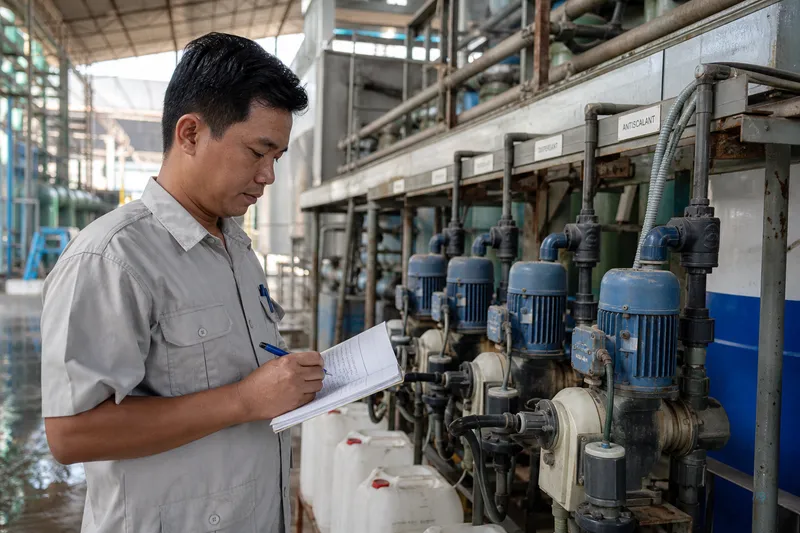
Underdose scales. Overdose fouls. Bring feed analysis, pump reality, and normalized trends into one brief before the next CIP guess.
Message on Viber, request a water-factory or engineering quote, or visit the Insein showroom with your plant logs.
Related solutions
Next step
Request a quote with quantity, destination and application. We follow up by email.
More guides: Solutions guides