Solutions / Guides / Hotel Cooling Towers in Wet Standby — Low-Season Circulation and Stagnation Risk
Empty floors still wet the tower basin.
Hotel Cooling Towers in Wet Standby — Low-Season Circulation and Stagnation Risk
For: Hotel chief engineers, facility managers, and owners in Myanmar tourism markets
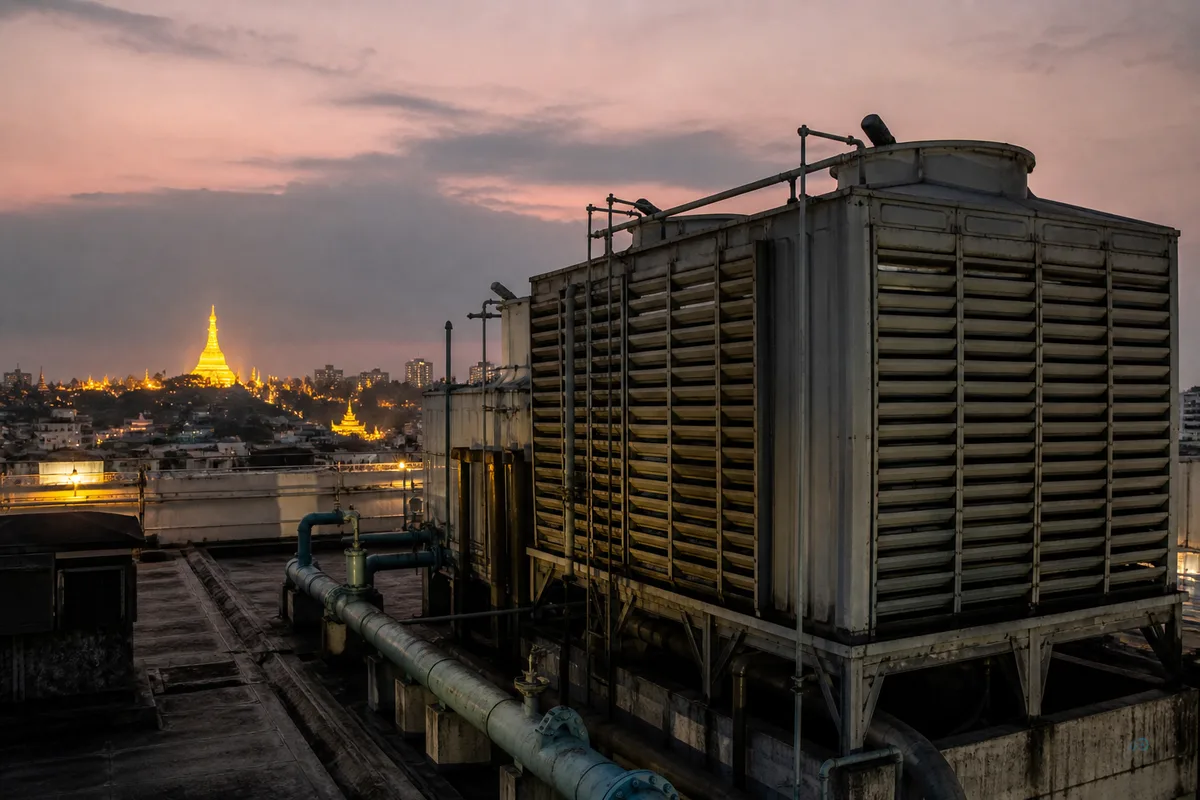
Low season in Myanmar hotels has a misleading quiet.
Guest floors drop. F&B covers shrink. Housekeeping closes wing after wing.
The cooling tower often stays wet — basin full, chemicals still billed, fan cycles irregular — because “we might need AC tomorrow.”
This guide is about wet standby: circulation, stagnation, and ownership in the months when occupancy is thin — Yangon business hotels, Mandalay heritage properties, Ngapali resorts, and delta city stops all share the pattern.
Wet standby is not “off”
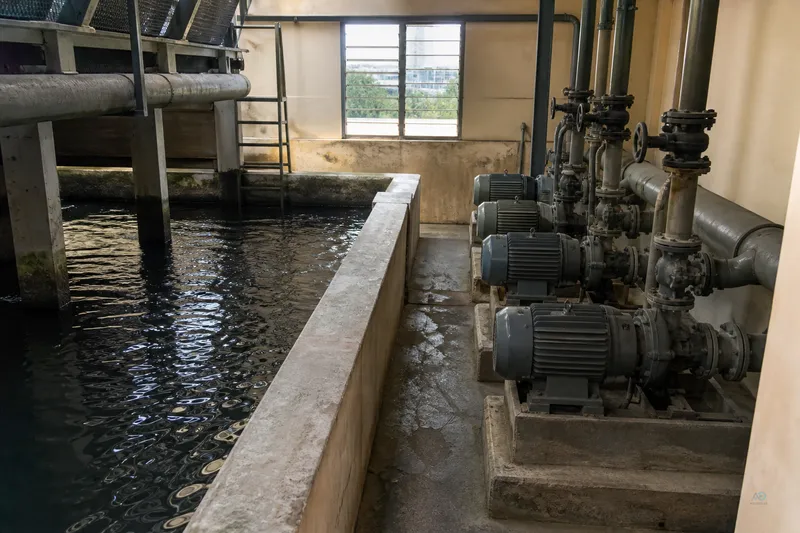
Dry standby drains or isolates the system. Wet standby keeps water in the loop with reduced heat load — common when restart cost, humidity control, or contract language discourains full drain-down.
The risk profile changes:
- Lower biocide demand signal can lie — biology does not respect occupancy spreadsheets
- Stagnant branches on unused guest wings may still connect to central plant headers
- Make-up float valves keep feeding while blowdown discipline slips
- Vendor visit cadence stretches because “nobody complained”
Engineering should write a low-season tower mode the same way kitchens write a monsoon checklist — monsoon water checks.
Stagnation paths guests eventually smell
Stagnation rarely announces itself on a dashboard. It shows up as:
- Odour at pool-deck air intakes
- Slime in sight glasses nobody walks past in low season
- Sudden scale or fouling when peak season restarts compress maintenance into one week
- Guest complaints framed as “room smell” while the root is utility idle logic
Picture a Yangon hotel after Thingyan: occupancy climbs fast, chillers surge, and a tower that barely circulated for weeks becomes everyone’s emergency. That restart pain is predictable — if low season had a named plan.
Checklist before low season ends
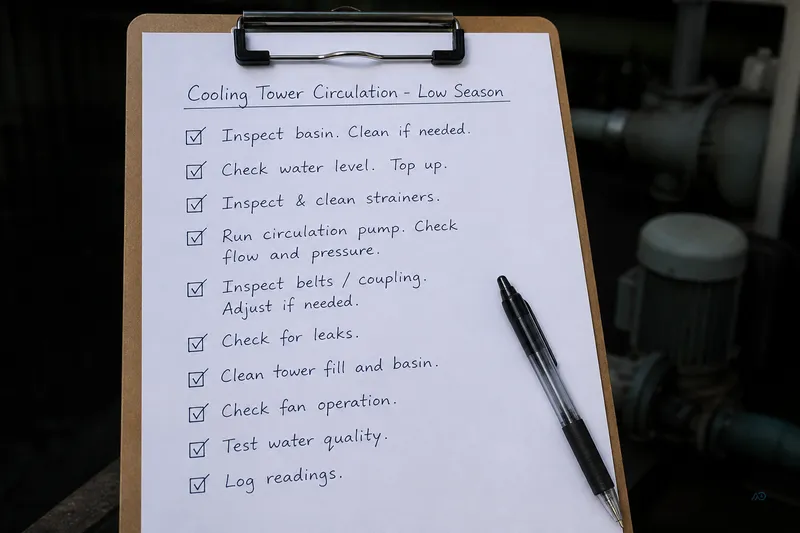
Facility teams can run this list without buying new fear posters:
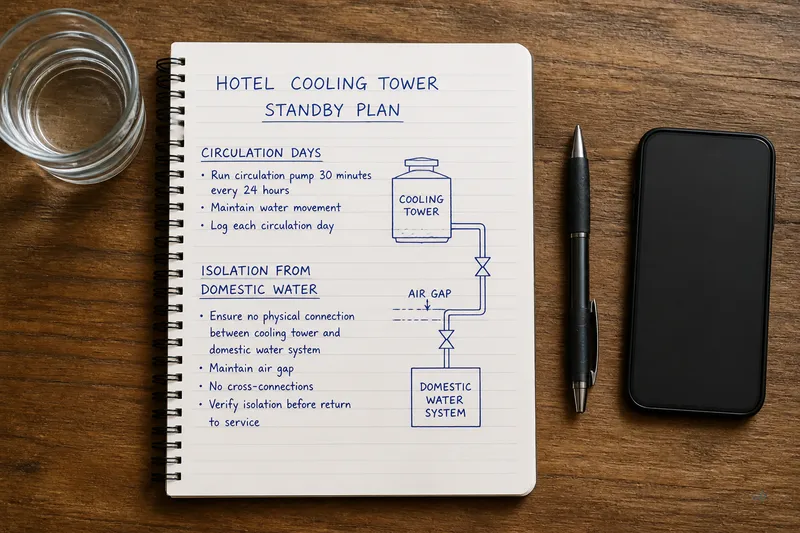
- Named standby mode — minimum circulation schedule, basin level, chemistry owner
- Branch isolation — which guest wings are valved off vs dead-legged
- Make-up source honesty — municipal intermittent supply, borehole, tank blend
- Basin inspection dates — photo log beats memory after staff turnover
- Drift eliminator & fill condition — cheap to note, expensive to ignore
- Contract scope — does HVAC vendor include low-season visits or only breakdown?
- Cross-connection hunt — potable tie-ins that should not exist — see cooling vs potable cross-connection
- Restart drill — who signs off before peak season first full load day
Hotels that also run restaurant peak kitchens should keep F&B water demand on a separate line from tower make-up — hotel restaurant RO peak service.
Make-up water and pretreatment boundaries
Tower make-up is not guest drinking water — but sloppy make-up documentation still breaks budgets. Record:
- Source type and seasonal change
- Test results if held — even partial
- Whether filtration or softening exists before the tower, and who maintains it
Do not copy a “standard dose” from a Facebook chart. Chemistry belongs with your water treater and site logs — AQUAPOLAR will not invent dose rates on this page.
Where hotels need purified water for kitchens, coffee, or ice, qualify that stream separately. Engineering quote paths can cover both — engineering intent when the brief spans utility and F&B.
Ownership when the chief engineer is on leave
Low season coincides with staff leave. The tower does not.
Write deputy ownership on the same page as the standby mode: who checks basin level weekly, who receives vendor PDFs, who escalates odour reports from housekeeping.
Mandalay properties with heritage wing retrofits and Yangon high-rises with mixed-age plant both suffer when as-built valve maps live in one person’s phone gallery.
What this guide is not
- Not Legionella scare theatre or disease-timeline marketing
- Not a promise that any product guarantees guest safety outcomes
- Not a substitute for your hotel’s licensed water-treatment contractor
- Not an excuse to ignore guest-facing potable quality where restaurants depend on honest peak capacity
What to send AQUAPOLAR on Viber
- Hotel city — Yangon, Mandalay, coastal, other
- Tower photo and approximate plant age
- Low-season occupancy pattern you actually see
- Current wet vs dry standby practice
- Make-up water source
- Known pain — odour, slime, scale, restart surges
- F&B purified-water needs if separate
- Quote path — hotels or engineering
Viber 09668896889 · Hotels Quote · Engineering Quote · Showroom / Insein · Facebook Message
Related guides
- Hotel restaurant RO peak service
- Monsoon water checks for restaurants and hotels
- Cooling vs potable cross-connection risk
- Hospital cooling tower water plan
Ready to name your low-season tower mode?
Empty floors still wet the basin. Write circulation, ownership, and restart logic before peak season turns stagnation into guest-facing noise.
Message on Viber, request a hotels or engineering quote, or visit the Insein showroom with your utility notes.
Related solutions
Next step
Request a quote with quantity, destination and application. We follow up by email.
More guides: Solutions guides