Support / Guides / Delta Well Buyers — Test Arsenic Before You Shop the RO Ad
The ad is ready. Your well result is not. That order is the mistake.
Delta Well Buyers — Test Arsenic Before You Shop the RO Ad
For: Ayeyarwady Delta and tube-well home buyers deciding whether to message sellers
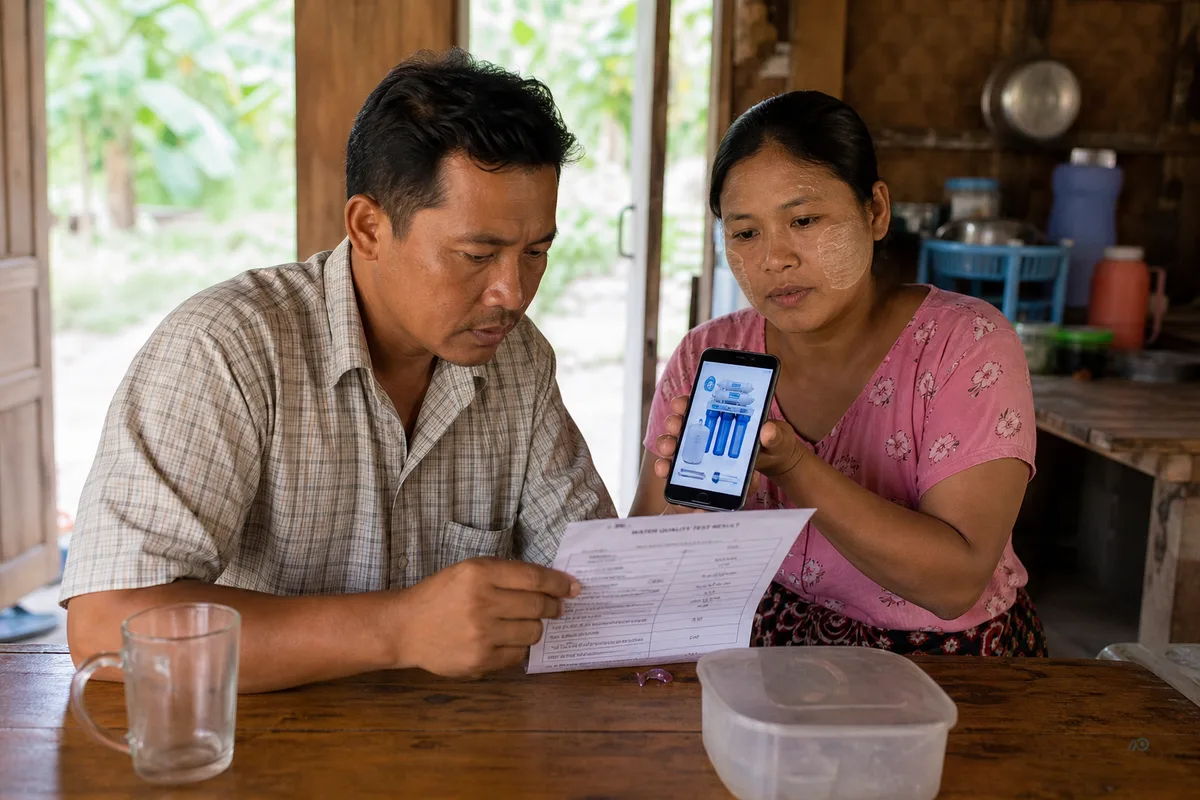
Facebook is fast.
Tube wells are not.
In the Ayeyarwady Delta and other well-dependent townships, the most expensive RO mistake often starts with a clean looking product photo — and a well that has never been written down with a number, a date, and a named limit.
This guide is about buying order, not a medical cure: test and name the arsenic picture before you shop the model.
The weekend that bought the wrong box
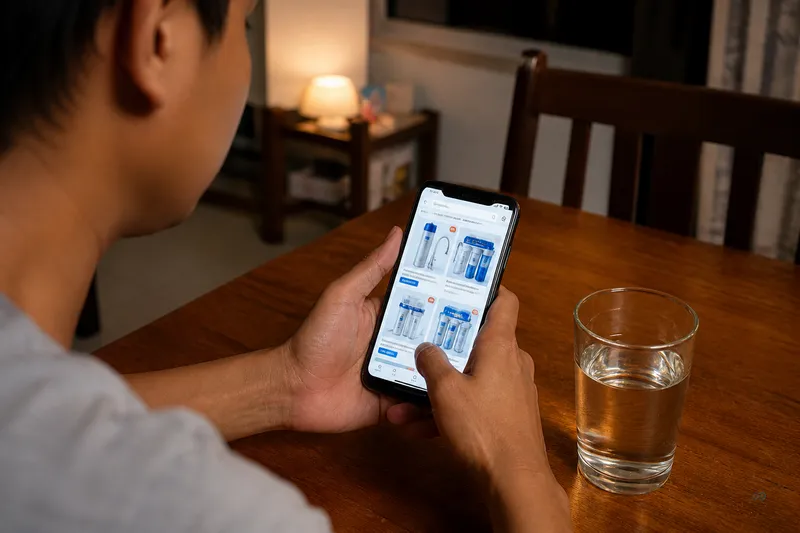
A brother in a delta township screenshots three “strongest” under-sink units after a neighbour’s kitchen looks brighter on Facebook. By Sunday night he has paid a deposit. By the next market day he learns the neighbour’s well was tested years ago, nobody kept the µg/L figure, and nobody can say whether “pass” meant the stricter WHO 10 µg/L talk or a national 50 µg/L style limit.
He did not fail at shopping. He failed at sequence.
The machine may still fit a peak-demand story later. It cannot repair a buying journey that skipped the source.
Why delta buyers feel ad pressure first
Delta arsenic mapping and related well-screening coverage keep showing the same operational gap: wells are common, risk communication is uneven, and owners often remember a word like “pass” better than a number. Search behaviour around field kits and tube-well testing is real — people know testing exists — but the Facebook funnel still pulls attention toward housings, stage counts, and “hospital grade” language that honest sellers should refuse.
So the tension is not “ads are evil.” The tension is ads arrive before evidence.
If you live on a tube well, shallow well, or mixed tank/well setup, treat model shopping as step five, not step one.
The five-step order that protects the deposit
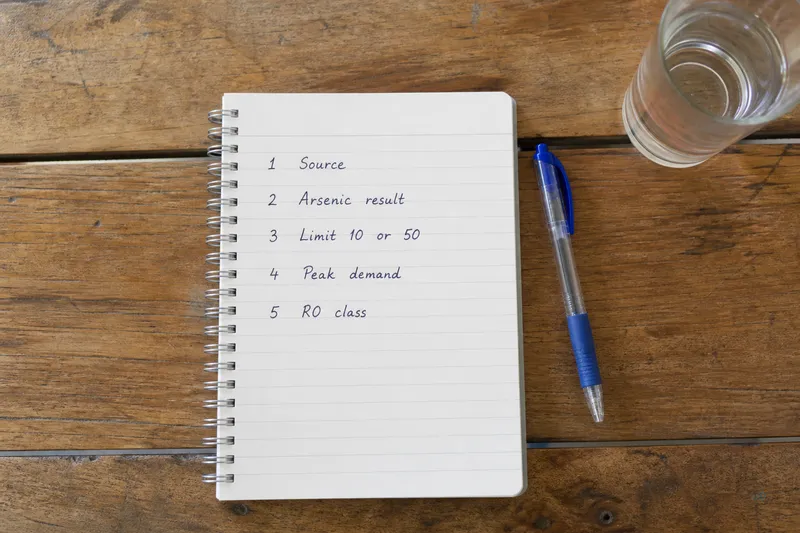
- Source honesty — tube well / shallow well / city mix / tank; rain behaviour
- Arsenic result — number + units + date if you can get them
- Named limit — ask which threshold was used (see Myanmar 50 vs WHO 10)
- Peak demand — morning bottles, cooking share, guests — morning rush
- Only then compare capacity class and install path
Skip 2–3 and you are comparing paint colours on a problem you have not described.
Skip 4 and you may buy a class that “looks serious” but still empties the jug at 7:20am.
What “test first” is not
- Not a home medical diagnosis
- Not a promise that RO, UV, or any ad badge “cures” arsenic exposure
- Not a reason to invent outlet µg/L guarantees from a product photo
- Not a substitute for TDS context when your actual panic is a meter screenshot
- Not permission to ignore pressure, drain, and space — 4 checks
AQUAPOLAR will not sell “medical-grade arsenic removal” theatre. Dealers who need the same red line language: refuse cure claims, keep the brief.
New well? Same order — louder.
New boreholes keep appearing faster than memory keeps results. Research and field practice keep urging continued testing and clearer owner communication for exactly that reason. If the well is new, do not treat “the driller smiled” as a water plan. Write the test down before you write the seller a deposit message.
Iron staining or yellow water after rain can be a clue to ask better questions. Colour alone is not a lab panel.
Two messages — only one is ready for a quote
Not ready
> “Send strongest RO. Well is fine. How much?”
Ready
> “Township ___. Tube well. Arsenic result ___ µg/L on ___ (or not tested yet). Limit used unknown / 10 / 50. Morning: tea + rice wash + 3 bottles. Space under sink limited. Want class talk, not a cure claim.”
The second message is slower to type and faster to finish.
When RO Machine 400GPD-class enters

Bring RO Machine 400GPD into the talk when:
- the source picture is honest (including “not tested yet”), and
- peak demand is real — drinking plus cooking, bottle loads, guests — not only fear of a neighbour’s ad
400GPD is a capacity-class name, not a certificate that your well outlet will meet any arsenic number. Product: RO_400GPD · what 400GPD means · who it fits.
If you are still stuck on dual-standard language, finish that page first: Myanmar 50 vs WHO 10.
Paths people discuss after a result
Households and technicians discuss different forks after a clear result: retest, change drinking source, treatment process options, or keep the well off the drinking line. Those are planning forks. None of them are a Facebook slogan.
Your job as a buyer is not to become a process engineer overnight. Your job is to stop paying deposits before the fork is named.
How sellers should answer (and how you should walk away)
Good answer: asks for township, source, test status, peak hour, space — then offers a showroom or quote path.
Bad answer: “Removes arsenic 99%,” “hospital grade for kids,” countdown timers, or refusal to say whether they mean a capacity class or a medical claim.
Photo-only buying is how deposits disappear. Local path: showroom vs Facebook-only · local support.
What to send on Viber
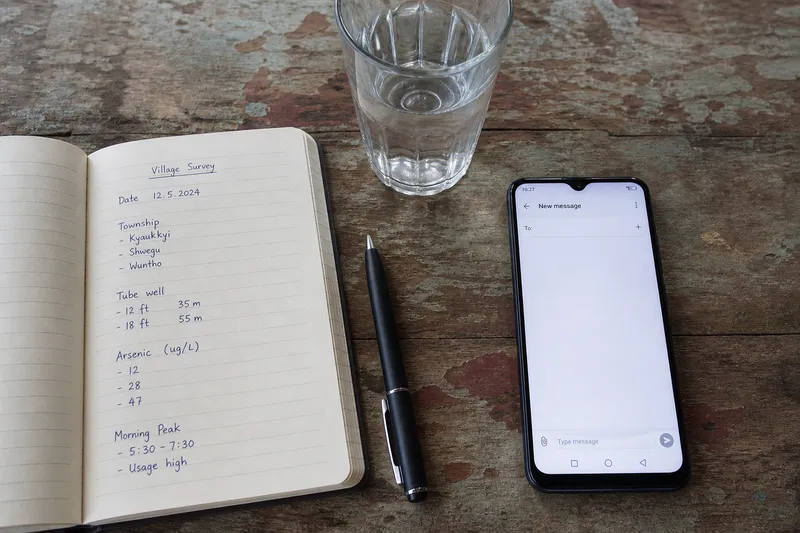
- Township / village area (delta or other)
- Well type and rain behaviour
- Arsenic: number / date / limit — or “not tested yet”
- Morning peak jobs that need purified water
- Space and pressure notes
- Whether you want Insein showroom talk or a written quote
Viber 09668896889 · Get Quote · Showroom · Facebook Message on the AQUAPOLAR page
Related
- Myanmar 50 vs WHO 10
- Five questions before RO quotation
- Buying RO by price only
- UV vs RO — what to ask
- FAQ
Ready to test the order — not only the price?

Put the well on paper before you put the deposit on a housing colour. That single swap — evidence before ad — is how careful delta buyers avoid paying twice.
Message on Viber, request a quote, or visit the Insein showroom with your well notes.
Related products
Next step
Request a quote, or use Viber for Myanmar local support.
More guides: Support guides