Support / Guides / Should You Test TDS Before Buying a Home RO?
TDS can wake you up. It cannot finish the sizing conversation alone.
Should You Test TDS Before Buying a Home RO?
For: Myanmar home buyers worried about TDS / water quality
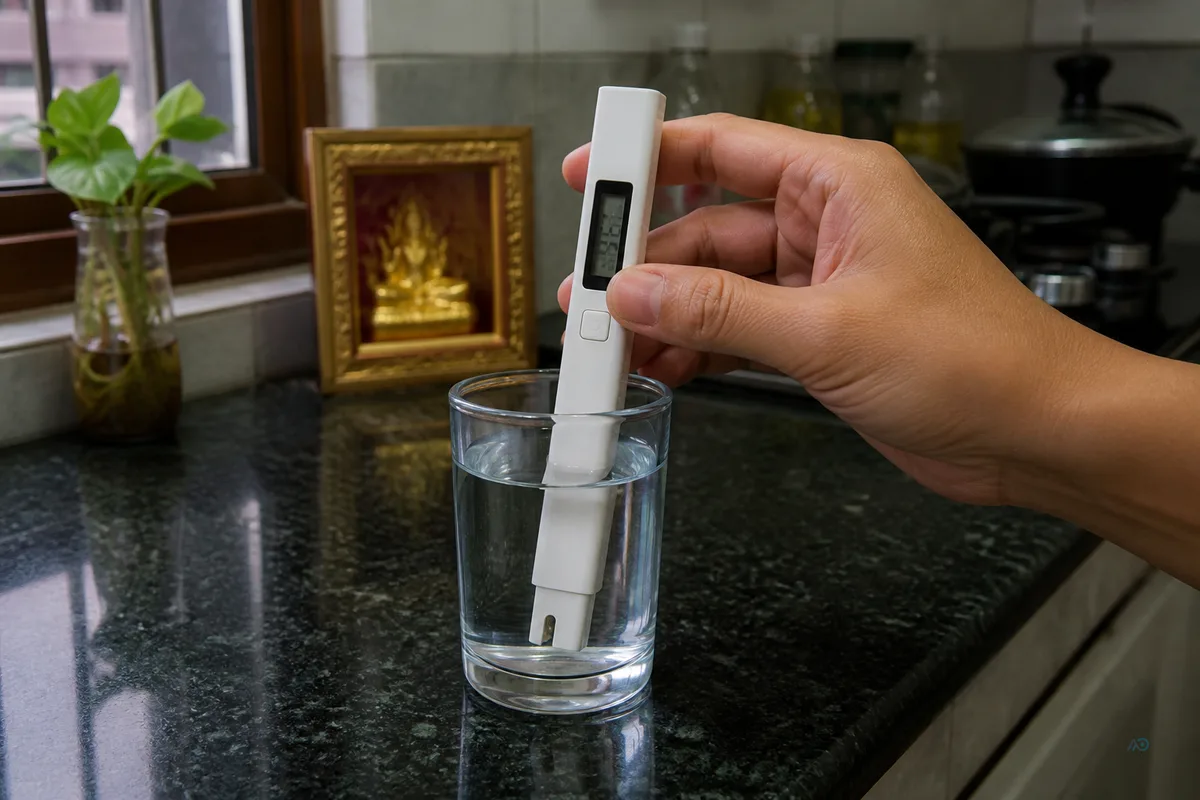
A bright TDS number on a phone screen can feel like a verdict.
It is not. It is a conversation starter — useful when paired with peak demand, install reality, and seasonal water mood, dangerous when treated as a complete buying algorithm that replaces every other question a household should be asking.
Treated the right way, a single reading can shorten a buying decision from weeks of worry to one clear conversation.
The reading that started an argument
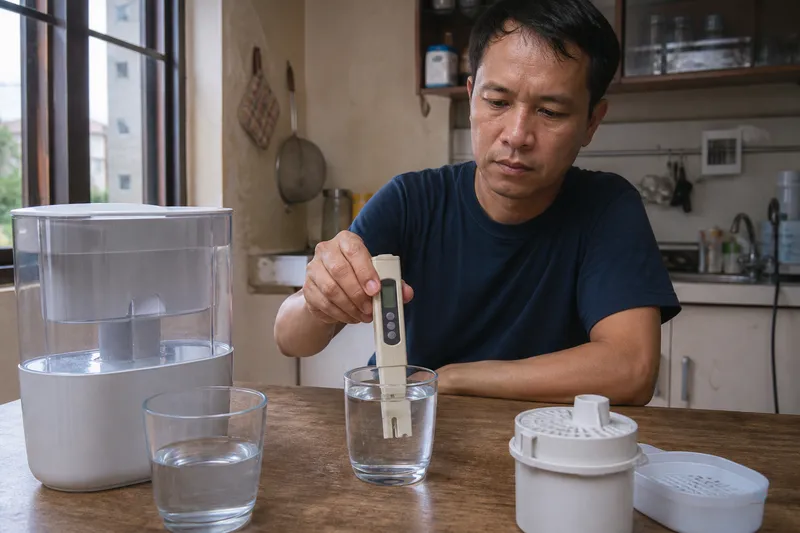
A father in Thaketa buys a cheap handheld TDS meter after seeing an ad promising to "reveal what's really in your water." The reading comes back higher than he expected, and within an hour he has messaged three different sellers asking for their "strongest" RO unit, convinced the number alone tells him everything he needs to know.
None of the three sellers ask him a single question about his family, his peak hours, his pressure, or his budget. Two of them simply quote their most expensive model. The third asks what the number was compared to — his previous reading, a neighbour's tap, or nothing at all — and the father realizes he has no baseline whatsoever. The number felt like a fact. It was actually a question he had not finished asking.
That gap between "a number" and "a finished question" is where most TDS-driven purchases go wrong.
Why TDS anxiety is rational
Households care about what is dissolved in drinking water, and that concern is not misplaced. WHO's *Guidelines for Drinking-water Quality* discuss a wide range of chemical and aesthetic parameters that shape trust in a supply. A handheld meter that reports total dissolved solids gives one rough signal among many — not a full laboratory panel, and not a medical diagnosis of anything specific.
Myanmar's JMP-linked estimate that about 60% of people used safely managed drinking water in 2024 (SDG 6 Data) helps explain the emotion behind the number: acceptable water at home is still unfinished business for many families, and a bright red number on a cheap meter taps directly into that anxiety. The feeling is understandable. Screenshot shopping is not sufficient on its own.
What TDS is good for
- Spotting a large shift after seasonal change or nearby pipe work
- Comparing relative readings — same meter, same method, same tap — over time
- Bringing a concrete question into a Viber conversation or a showroom visit instead of a vague worry
What one number cannot prove
- Your peak-hour jug emptiness — morning rush
- Whether kids' bottles and rice wash already share the line — hidden load
- Whether pressure will punish any class you choose — low pressure
- Whether a taste or smell change after rain is an aesthetic feed shift — rainy season
- A guaranteed RO outlet reading for your specific kitchen, before any install has even happened
Reminder: 400GPD is a capacity class name, not a lab certificate. AQUAPOLAR does not invent a guaranteed TDS result from this page, and no honest seller should promise one from a screenshot alone.
Two buyers, one number, two very different weeks
Two families in the same neighbourhood test their tap water within days of each other and get similar TDS readings. The first family treats the number as an emergency, orders the most expensive unit advertised that week, and spends the next month worrying whether it was "enough" because nobody explained what the number actually meant for their household.
The second family takes the same reading to a technician along with a short note about their peak hour, their household size, and their budget. The technician explains that the reading alone does not determine which class fits — the peak hour and household size do most of that work — and recommends a straightforward class based on the fuller picture. The second family spends less money and worries less, because the number was one input among several instead of the entire decision.
Same reading, same neighbourhood, two very different experiences — because one household stopped at the number and the other kept asking.
Why "higher number, bigger machine" is not how sizing works
It is tempting to assume that a higher TDS reading automatically means a household needs a larger or more expensive RO class. In reality, TDS and peak-hour capacity are largely separate questions. A single person living alone with a high TDS reading may need a modest class handled carefully; a family of six with an average TDS reading may need a larger class purely because of how many people draw water in the same twenty minutes.
Collapsing these two separate questions into one number is exactly how buyers end up either overpaying for capacity they do not need, or underbuying capacity while overpaying for filtration stages that were never the actual problem.
Separating the two questions from the start — one for household demand, one for water composition — is a small mental shift that prevents both mistakes at once.
The screenshot trap
Sellers love a dramatic number because it shortens the sales conversation to almost nothing. Buyers panic into price-only or friend-copy decisions, chasing the "strongest" machine instead of the right one for their household. A complete brief still needs the five quotation questions, not one reading — 5 questions.
The father in Thaketa eventually asked the fourth seller for those five questions instead of a quote. That conversation took longer than the first three combined, and it was the only one that actually matched a machine to his household.
He later admitted the extra twenty minutes felt slow at the time, but saved him from buying a machine sized for a household twice the size of his own.
Should you test before you buy?

Yes, if it reduces panic and improves the questions you ask a technician.
No, if you treat the meter as a substitute for peak demand, space, pressure, and after-sales support.
Test as a flashlight that helps you see one corner of the room. Do not treat it as a judge that decides the whole case on its own.
That distinction is small in words and large in outcome.
When RO Machine 400GPD-class enters
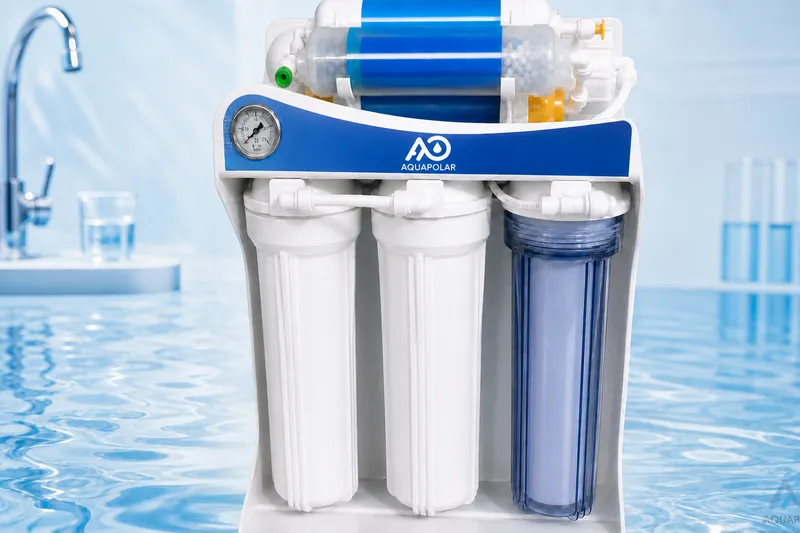
Bring RO Machine 400GPD into the talk when TDS worry sits next to real higher demand — drinking plus cooking, bottle loads, guests — not when the only input anyone has offered is a lone screenshot from a cheap meter.
Product: RO_400GPD · who it fits · what 400GPD means.
What a technician actually does with your number
When a reading reaches a real conversation instead of stopping at a screenshot, a technician typically treats it as one line in a short brief rather than the headline. They will usually still ask about household size, peak hour timing, whether cooking shares the same line, pressure and space, and what has already frustrated the family about their current setup.
The TDS reading answers one narrow question — is there a large dissolved-solids shift worth noting — and the rest of the brief answers the questions that actually decide which class and which install approach make sense. Skipping straight from a number to a purchase skips every one of those decisions.
That is why a good technician conversation often feels slower than a Facebook quote at first, and ends up cheaper and more accurate in the end.
A short note on cheap meters themselves
Not every handheld meter is calibrated the same way, and readings can drift with a low battery or a worn probe. If a number seems dramatically different from what a neighbour reports on a similar source, that gap is worth mentioning to a technician rather than treating as confirmed fact. A second reading, on a different day, costs little and adds real confidence either way.
None of this means the reading is useless — it means one imperfect reading deserves a sanity check before it drives a purchase decision.
What to send on Viber

- TDS reading, noting the meter brand and time if known
- Peak window and the water jobs sharing that line
- Taste, smell, or seasonal notes
- Space and pressure notes
- Your township
Viber 09668896889 · Get Quote · Showroom
Related
Ready to use TDS as a question — not a fantasy?
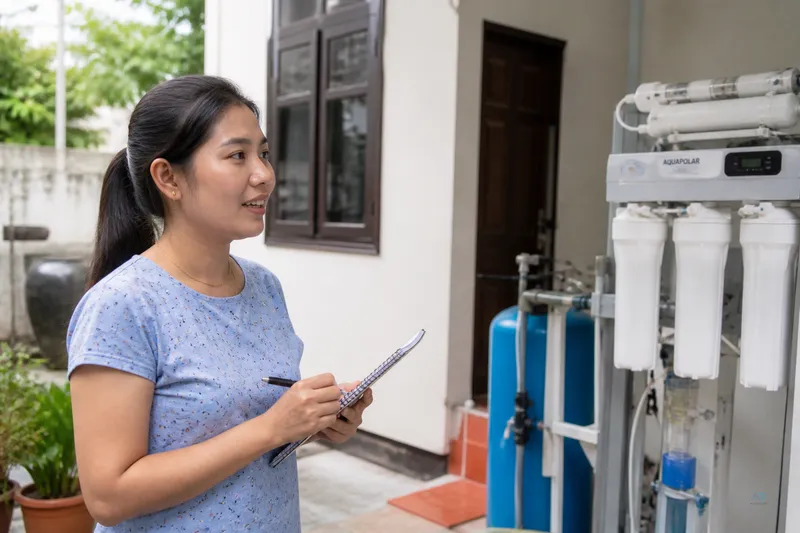
Bring the number and the rush-hour story to the same conversation. That combination — not a lone screenshot — is how smart buyers talk about class fit in Yangon.
A five-minute message that includes both is worth more than an hour spent comparing screenshots on Facebook.
Message on Viber, request a quote, or visit the showroom with your reading in hand.
Related products
Next step
Ready to talk through fit for your home or site? Message on Viber or request a quote.
More guides: Support guides