Support / Guides / Who RO Machine 400GPD-Class Usually Fits (And Who Should Size Up)
Right class. Or size up. Ask peak demand.
Who RO Machine 400GPD-Class Usually Fits (And Who Should Size Up)
For: Myanmar buyers deciding if 400GPD-class is enough
RO Machine 400GPD is a capacity class — not a promise that every Yangon home gets the same daily gallons out of the tap.
This page is a fit talk, not a guarantee table, and not a competition to buy the biggest number on the sticker.
Most buyers arrive at this question from one of two directions: worried they will under-buy again, or worried that paying for a bigger class is somehow wasteful if the household turns out to be "average" after all. Both worries come from the same missing step — nobody has actually described the peak hour yet.

Fit starts with need — and Myanmar households already fight for reliable water
WHO/UNICEF JMP tracking shows safely managed drinking water is still incomplete worldwide, and Myanmar's JMP-linked estimate sits around 60% coverage in 2024 (SDG 6 Data). That backdrop explains why home RO decisions feel heavy: families are not shopping for a gadget to admire, they are shopping for water available when life peaks — the school run, the dinner rush, the guest weekend.
Class fit therefore starts with a peak-demand question, not with a polite average or a bigger-is-safer instinct.
Two neighbours, two mistakes, same missing question
Two households in the same Insein compound bought RO units in the same season. One picked the smallest, cheapest unit advertised, reasoning that "we don't drink much anyway" — the same soft sentence that undersizes most homes. The other picked the largest class available "just to be safe," reasoning that more capacity could never be a bad thing, and paid extra for headroom their household never actually used.
Neither household was asked a single question about their peak hour before either purchase. The first family now argues over the jug most mornings, buying bottled water for the school run twice a week. The second family has a machine that comfortably out-performs their real demand, sitting in a cabinet that could have held the smaller class at a noticeably lower price, with money spent on capacity nobody in the house ever needed.
Both households would describe their purchase as "cautious." Only one of the two mistakes is loud enough to notice quickly — the other quietly overspends for years without ever announcing itself as a problem.
A third neighbour in the same compound did something different before buying anything: she wrote down when her kitchen actually ran short of water, counted the people and bottles involved, and only then asked a seller whether a smaller or bigger class made sense. Her conversation took an extra day compared to her neighbours' same-week purchases. Two years later, she is the only one of the three who has never once questioned whether she bought the right machine.
First rule: peak demand, not soft averages, not bigger-is-safer
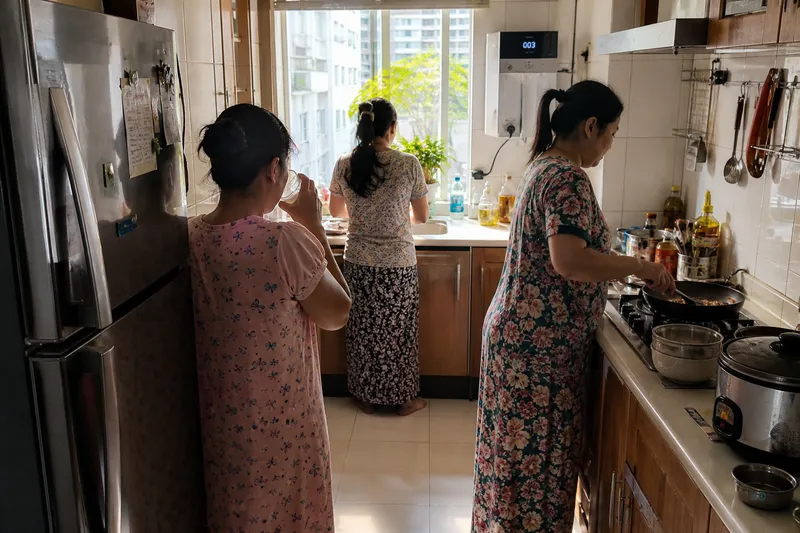
If your pain is 7–9am waiting, school bottles, hot evenings, or guest weeks, the fit conversation should start there, not at the price list:
Who 400GPD-class usually enters the conversation for

Typical home patterns that make this class worth discussing — still subject to site confirmation before anyone commits:
- Purified water covers drinking and regular cooking, not just occasional glasses
- Mornings already create waiting on a smaller pattern, most weeks rather than once a season
- Growing bottle counts or frequent guests already stretch a smaller tank
- Buyers who want a Yangon-local path — Viber, quote, or showroom — instead of guessing from an overseas datasheet
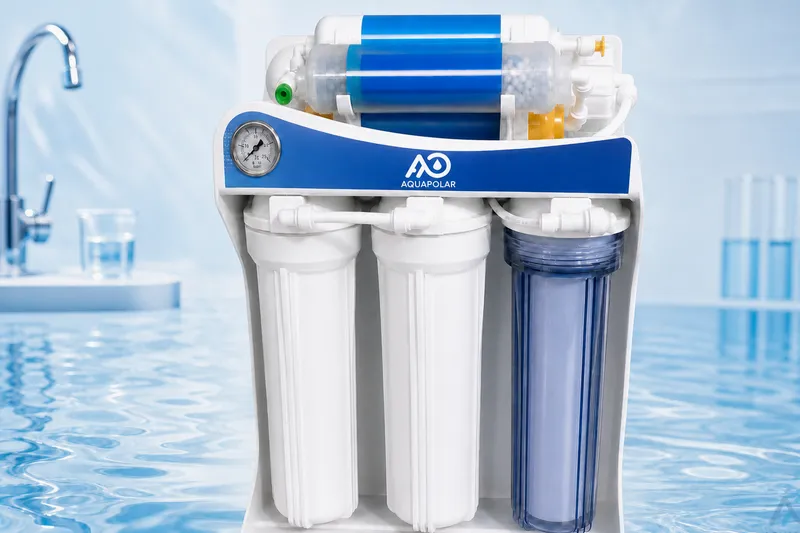
Product: RO Machine 400GPD · what 400GPD means.
None of these patterns are a checklist to tick blindly. They are conversation starters — a household matching two or three of them is worth a proper fit discussion, not an automatic order.
Who should pause or widen the brief instead
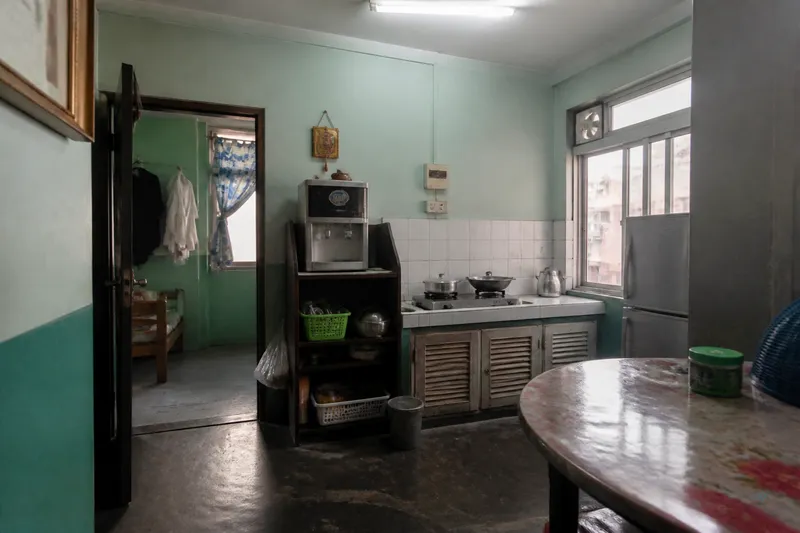
None of the situations below mean a household is stuck or unwelcome — they simply mean the standard home-class conversation needs a wider brief before anyone commits to a class name.
Not every stretched household needs this class, and not every quiet household needs to feel behind for staying smaller. Pause and widen the brief when:
- The real peak is a shop or kitchen with genuine commercial volume — commercial when home class fails
- Feed pressure is very weak and has not been discussed at all — low pressure
- There is no confirmed space for a unit or tank yet — install · storage tank
- The size decision so far is only a copy of a friend's machine — friend-sizing
- The only evidence gathered so far is a price screenshot — price-only
The cost of guessing instead of asking
Skipping the fit questions rarely fails loudly on day one. It fails quietly, in one of two predictable directions:
- Undersizing turns into months of bottled water spending that eventually costs more than the class upgrade would have
- Oversizing turns into money spent on capacity the household never draws on, sitting in a cabinet that could have held a smaller, cheaper unit
- Either mistake gets repeated at the next apartment, because the real lesson — describe the peak hour first — was never learned the first time
- A rushed decision under move-week or emergency-buy stress locks in whichever mistake is closer at hand
A short fit conversation before payment is cheaper than either mistake, and far cheaper than both mistakes made twice.
What a good fit conversation actually sounds like
It rarely sounds like a sales pitch. It sounds closer to a short interview: when does the jug run low, who else is drawing from the same line, what does the kitchen actually have room for, and what happened the last time water ran short. A seller asking these questions is not stalling the sale — they are protecting both sides from a class decision that gets quietly regretted six months later.
If a chat skips straight from "hello" to a price and a product code, that speed is not a sign of efficiency. It is a sign that nobody on the other end plans to be involved in whether the machine actually fits your kitchen.
Seasonal water mood is not a class substitute
Rainy-season taste and smell shifts, or a sudden curiosity about TDS numbers, matter to how a household feels about its water — rainy season · TDS before RO — but they do not replace the peak and install questions above. WHO's GDWQ framing treats taste, odour, and appearance as aesthetic water-quality signals, distinct from a capacity-class decision. A worried week about smell is not evidence for a bigger machine on its own.
Fit is a conversation, not a one-time verdict
A fit decision made today is not permanent. Households grow, guests become more frequent, a home business starts using the same kitchen tap for extra jobs nobody planned for at purchase time. Revisiting the fit question a year or two later is not a sign the first decision was wrong — it is the same honest habit that got the first decision right, applied again as life changes.
Sellers who treat fit as a single locked-in verdict, never to be revisited, are usually the same sellers who never asked the peak-demand question properly the first time either.
Fit conversations are quick once you know what to bring
A fit conversation does not need to feel like an interrogation. Most households can answer all five fit questions in under ten minutes once they sit down and actually think about a normal week, rather than trying to answer from memory in the middle of a busy chat. Writing the answers down once, before messaging anyone, tends to produce a more accurate brief than answering questions live under time pressure.
What this page will not pretend
- No guaranteed gallons per day for your specific kitchen
- No one-size family-count chart that replaces real questions about your household
- No fake stock numbers — ready stock is confirmed per enquiry, not published as a permanent promise
Fit questions to send
- Peak time and the water jobs happening in it
- People, bottles, and cooking currently sharing the purified line
- Space and pressure notes for the kitchen
- Current machine and what specifically fails
- Support expectation after you pay
Viber 09668896889 · Get Quote · Showroom · 5 questions
Bring these same answers to the showroom if an in-person visit is easier than typing them out — a technician can walk through fit questions face to face just as well as over Viber.
Related
Ready for a fit talk — not a sticker contest?

Describe the rush hour, not the neighbour's machine. Then ask whether 400GPD-class actually belongs in your kitchen — or whether the brief itself, not the size, is what needs to change.
Right-sized is not the same as biggest, and it is not the same as cheapest either. It is whatever matches your real morning.
Two neighbours, two mistakes, and a third who simply asked first — the fastest way to know which household you resemble is to write down your own peak hour before the next chat begins.
Message on Viber, request a quote, or visit the showroom path.
Related products
Next step
Ready to talk through fit for your home or site? Message on Viber or request a quote.
More guides: Support guides