Support / Guides / Kids, Guests, and Washing Rice — The Hidden Home Water Load
“We only drink a little” is how undersized homes stay undersized.
Kids, Guests, and Washing Rice — The Hidden Home Water Load
For: Myanmar families who underestimate purified-water use

Many Yangon buyers open the same soft sentence when a technician asks about their water use: “We only drink a little.”
Then the kitchen tells a different story. Kids’ bottles lined up before the school gate. Rice wash competing with the morning tea kettle. A guest glass at the wrong moment, right when the jug was already low. Suddenly the small RO that “worked on paper” feels slow every busy hour — and nobody in the house can say exactly why.
This guide names the hidden home water load — the ordinary jobs that quietly share one purified line with drinking — so a family stops sizing from a myth and starts sizing from a real week.
Why “drinking-only” math fails families
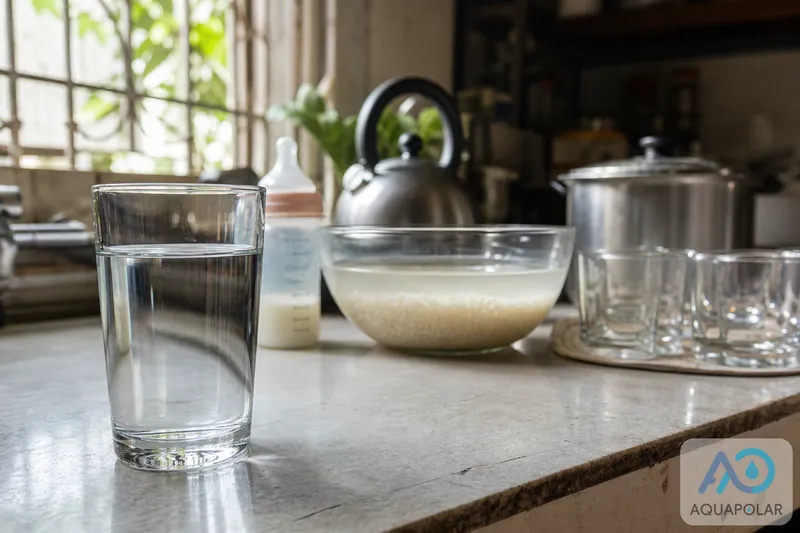
Household drinking water is not a boutique sip count. Global WASH monitoring treats safely managed drinking water as water that is available when needed and safely managed at the household level (WHO/UNICEF Joint Monitoring Programme / SDG 6.1 framing). In Myanmar, JMP-linked SDG 6 estimates still show large gaps: about 60% of the population used safely managed drinking water services in 2024 (UN-Water / SDG 6 Data portal).
That national context is not an RO sales pitch. It is a reminder that families already fight for reliable, acceptable water at home — long before anyone mentions a brand. When purified water also covers cooking, rice wash, and bottles, the sentence “we only drink a little” under-describes the job the machine is actually asked to do every single day.
The gap between the sentence and the sink is exactly where sizing mistakes are born.
A normal weekday, counted honestly
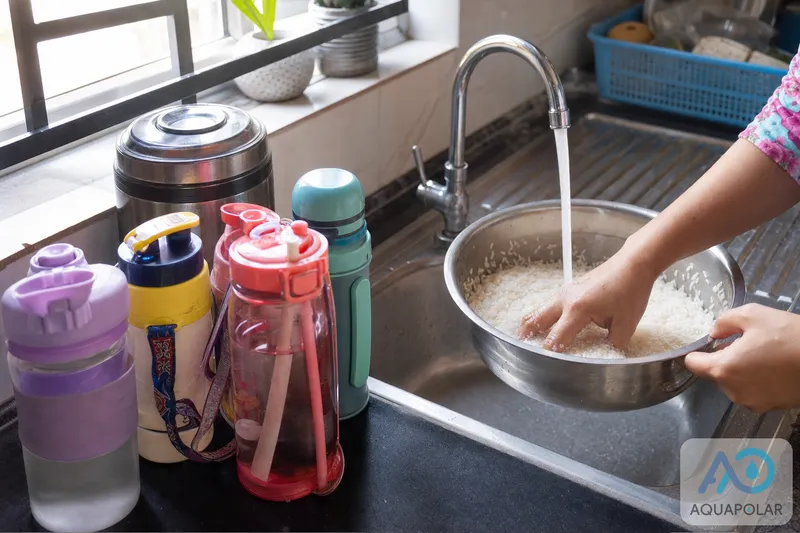
On a normal Yangon weekday, one purified line may quietly carry:
- Drinking — glasses through the day, more in hot months
- Kids’ bottles — several fills in one rushed pre-school window
- Tea / coffee — hot water starts the day before anyone has left the house
- Rice and vegetable wash — cooking water pulled before the stove even lights
- Guest glasses — one relative’s visit quietly doubles a quiet afternoon’s draw
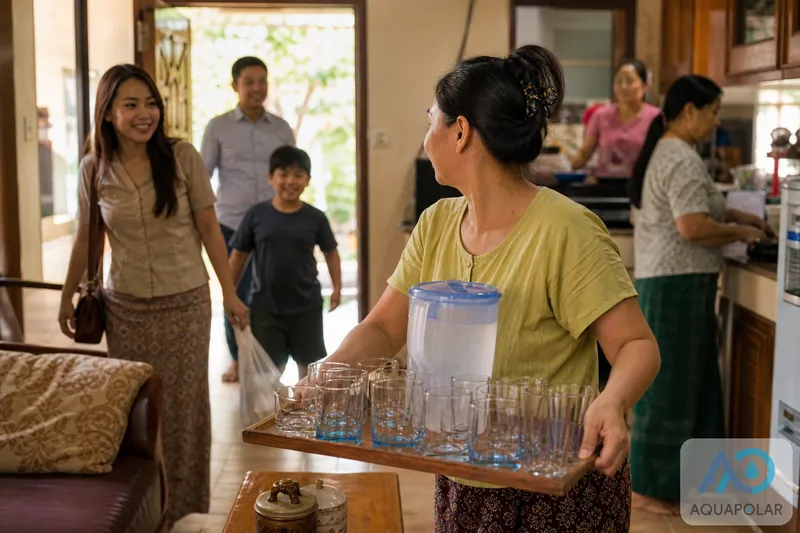
None of these five jobs feels dramatic on its own. Stacked into the same one or two hours, they explain why a “light-use” household still runs dry before 8am.
Related peak guides: morning rush · school-term bottles · Thingyan / guests.
Two families, same sticker, different mornings
Picture two households that bought the exact same small RO unit in the same month. One is a retired couple who drink tea and little else — the machine keeps up easily, every single day. The other is a family of five with two school-age children, a helper who cooks daily, and grandparents visiting on weekends. Same box, same sticker, completely different jobs asked of it.
Six months later, the couple is still happy. The family of five is quietly buying bottled water for school mornings and blaming the “weak” machine — when the real story is a household load that was never counted before the purchase. The unit did not get worse. The job it was never sized for simply arrived on schedule, every morning, right on cue.
The moment the myth breaks
The break usually looks the same in almost every home. Someone reaches for the jug for a normal glass of water and finds it empty — not because anyone did anything wrong, but because five small jobs landed in the same twenty minutes. The next reach is for a plastic bottle from the shop, “just for today.” A few weeks later, “just for today” has become the real system, and the RO sitting under the counter is treated as a backup instead of the main supply it was bought to be.
That quiet demotion — purified tap water losing to bottled water inside your own kitchen — is the real cost of undercounting the load in the first place.
It rarely gets fixed on its own. Most households simply adjust their routine around the shortage instead of questioning the sizing decision that caused it.
Heat and season change the same line
Hot months raise drinking frequency; monsoon weeks change taste and turbidity stories at the tap. WHO’s *Guidelines for Drinking-water Quality* note that aesthetic problems — taste, odour, appearance — often drive households to reject or bypass a supply even when the underlying water is otherwise fine. Your RO then faces both a peak-volume problem and a feed-water mood swing in the same year — hot season peak · rainy season taste.
Hidden load plus seasonal stress is exactly why quiet-week sizing collapses twice a year, not once.
Cost of ignoring the real list
Ignoring hidden load rarely shows up as one dramatic failure. It shows up as small, repeated costs:
- Morning arguments about who fills a bottle first
- Bottled water “just for school” quietly becoming the permanent plan
- A panic upgrade mid-term, chosen under stress instead of a calm brief — emergency buy risk
- Buying by Facebook price alone, with no load brief behind the decision — price-only trap
Each of these costs is avoidable with one honest week of counting. None of them require a bigger machine to solve — they require an honest list first, and a class decision second.
Why counting by sticker instead of by list goes wrong
Facebook shopping rewards a neat comparison: price on the left, GPD number on the right, decision made in one scroll. A real kitchen does not work that way.
Common mistakes that skip the load list entirely:
- Comparing only price and GPD sticker across two ads
- Copying a friend or cousin’s machine from a quieter household
- Sizing from “we don’t drink much” while the same line also washes rice and fills bottles
- Waiting until the old unit fully fails, then buying whatever is in stock that week
Counting the real jobs first — drinking, cooking, bottles, guests — protects a family from all four mistakes at once, because it replaces a guess with a short, honest list.
When RO Machine 400GPD-class enters
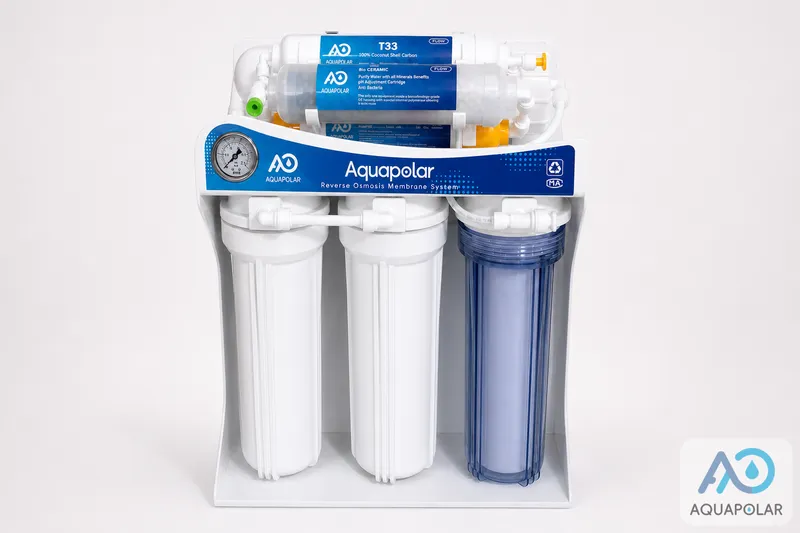
Discuss RO Machine 400GPD as a capacity class name — not a promise of 400 gallons every day in your kitchen — once the real list looks like this:
- Drinking and regular cooking share the same purified water
- Bottle counts and guests already create waiting at a predictable hour
- A quiet-week machine has quietly become a backup to bottled water
- You want a Yangon-local path — Viber, quote, or the Insein showroom — instead of overseas datasheet guessing
Fit: who 400GPD-class fits · what 400GPD means · product RO_400GPD.
Still confirm pressure and space before assuming a bigger class solves everything — low pressure · install checklist.
Install reality still matters
A correct load count is still only half a decision. Confirm where the unit and any tank can sit, whether drain and power are already in place, and who you message after the sale if something feels off in month two. Exact stages, warranty terms, and stock are confirmed for your order — never invented on this page.
Load list to send on Viber
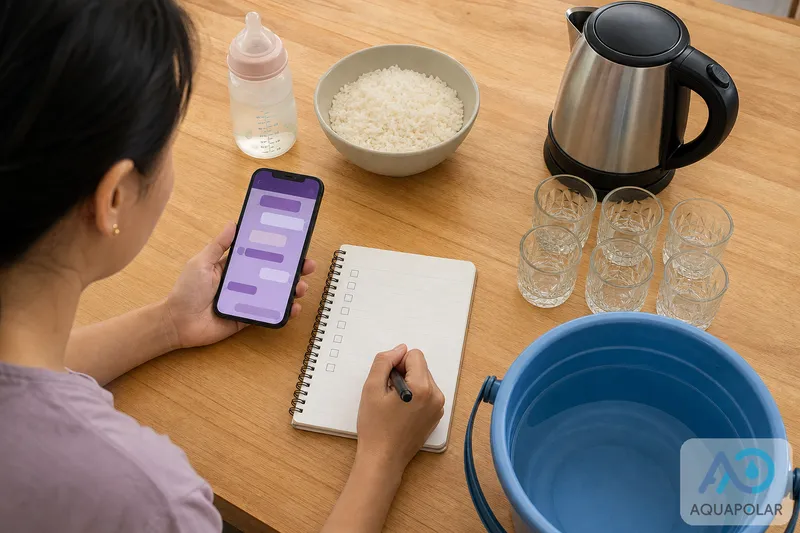
- Peak clock times, morning and evening
- Bottle count on a normal school morning
- Cooking on the same purified line? (yes/no)
- Guests / helpers pattern across a typical week
- What fails now — slow fill, empty jug, or bottled workaround
Viber 09668896889 · Get Quote — RO_400GPD · Showroom
Related
Ready to count the real load?
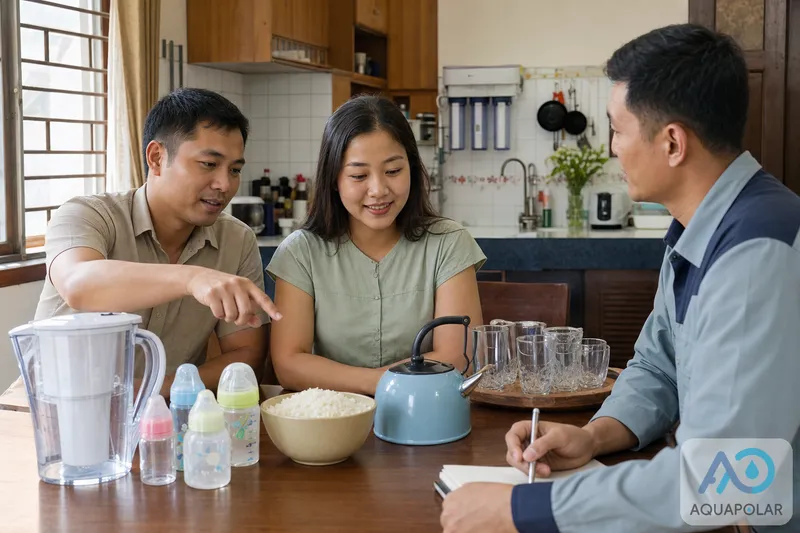
Stop sizing from “we only drink a little.” Count bottles, cooking water, and guests for one honest week — then ask whether 400GPD-class belongs in a claim-safe Yangon conversation.
The list takes ten minutes. The wrong-sized machine costs a year of quiet bottled-water spending instead.
Message on Viber, request a quote, or visit the showroom path.
Related products
Next step
Ready to talk through fit for your home or site? Message on Viber or request a quote.
More guides: Support guides