Support / Guides / Rainy Season Taste & Smell Changes — What to Ask
Rain changes the water story. Guessing makes it worse.
Rainy Season Taste & Smell Changes — What to Ask
For: Myanmar homes noticing taste or smell shifts in rainy season
Rainy season changes what many Yangon taps deliver, and it rarely announces itself politely.
Taste shifts. Smell shifts. Colour or fine sediment appears after a heavy storm, sometimes overnight. Families argue in the kitchen: Is the RO broken? Are the filters overdue? Should we panic-buy a bigger sticker before the next downpour? Almost nobody starts by asking a clear question — most start by guessing, and guessing is expensive.
This guide is about what to ask when rainy-season taste and smell change — before a guess turns into a wrong purchase.
The good news is that most of these questions cost nothing to answer, and the right answer usually points to a five-minute fix rather than a new machine.

The Tuesday everything tasted different
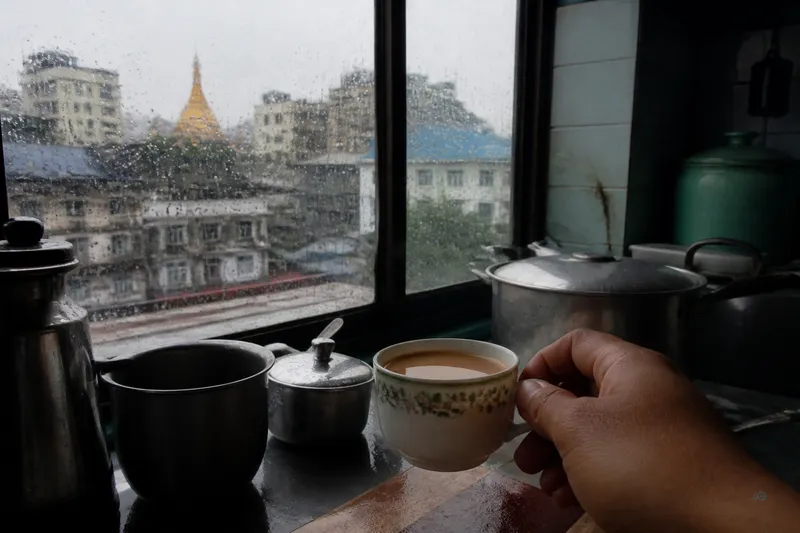
A family in a mid-rise flat in North Okkalapa notices it on a Tuesday morning: the drinking water tastes faintly different, almost metallic, and the usual tea does not taste right. Nothing on the RO unit looks broken. No leak, no strange noise, no error light. By evening the household has three competing theories — the filter is overdue, the municipal supply changed after last week’s storm, or the machine itself has quietly failed.
Only one of those theories can be tested cheaply and quickly. The other two need a service conversation, not a new purchase. Most families guess wrong first, because a taste change feels urgent and urgency skips straight to buying.
That family is not unusual. Almost every home in a rainy-season city has a version of this Tuesday at some point, and almost every one of them reaches for the same three theories before checking any of them.
Two neighbours, same storm, two different mistakes
Two flats in the same building notice the same taste change after the same heavy overnight rain. The first household calls a Facebook seller the next morning and orders a “new upgraded model,” reasoning that newer must mean cleaner. Three weeks later the taste issue is gone — but only because the municipal supply itself settled back down, exactly as it always does after a storm. The new machine had nothing to do with it, and the family never learns what actually happened.
The second household sends three photos and one message to a local technician instead: what changed, when it started, and whether the filters were already due. The technician suggests waiting one more day to see if the municipal supply settles, and checking the pre-filter in the meantime. It does settle. No new purchase, no wasted money, and a clearer picture of when the filter really is due.
Both households ended up with acceptable water again. Only one of them understood why — and only one of them is prepared for the next storm.
Seasonal water is a documented household stress
WHO’s *Guidelines for Drinking-water Quality* treat taste, odour, and appearance as aesthetic aspects that strongly influence whether people trust and continue using a supply — even when other risks are managed differently. Monsoon cities amplify that stress: runoff, pipe disturbance, and source variability can change what arrives at the kitchen within days, sometimes within hours of a major storm.
That does not mean every taste change equals a medical emergency, and it does not mean an RO sticker “cures” a municipal event. It means the decision process should separate feed-water mood, maintenance, and capacity class — three different questions that a worried household often collapses into one panic decision.
National WASH context still matters for why households care in the first place: WHO/UNICEF JMP-linked estimates put Myanmar’s safely managed drinking water coverage near 60% in 2024 (SDG 6 Data). Families already work hard for acceptable water at home; rainy weeks simply make that ongoing fight more visible for a few days at a time.
Why the instinct to blame the machine is so strong
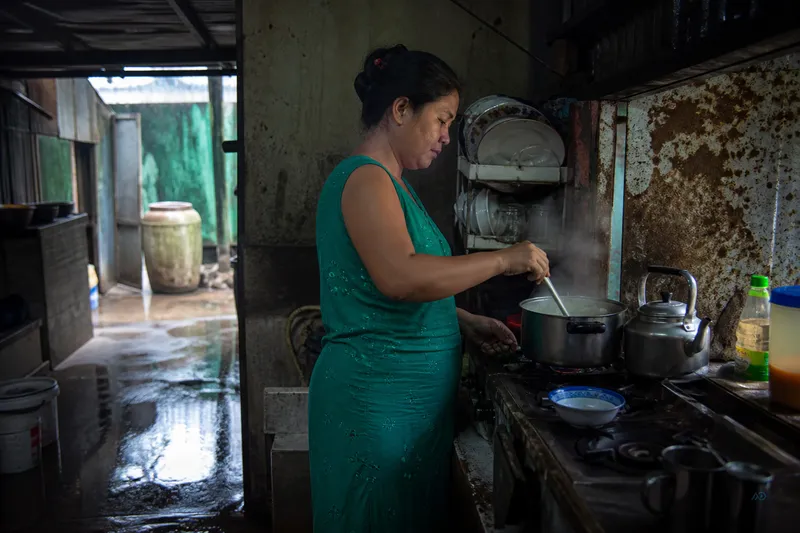
It is easy to understand why a taste change points a finger at the RO unit first. The machine is visible, physical, and sitting right there under the counter — while the municipal pipe network, the neighbourhood pumping station, and last night’s storm are all invisible from a Yangon kitchen. Blaming what you can see is a natural shortcut.
The shortcut is also usually wrong. Most sudden taste and smell changes after heavy rain trace back to the source or the feed line, not to a machine that was working perfectly the week before. Confirming that difference takes one conversation; guessing wrong costs a full replacement unit.
Ask these before you blame the machine class
- What changed — taste, smell, colour, or grit you can see or feel?
- When did it start, relative to heavy rain or flooding nearby?
- Is the issue at the raw tap, after pre-filters, or only at the RO faucet?
- When were filters or membrane last addressed? — filter change fear · spare parts
- Is peak-hour waiting also happening, or only a taste or smell change?
If the jug is empty every morning, that is still a peak-demand story, not a taste story — morning rush. If fill speed is fine but taste spiked right after rain, start with source and service questions before touching the sizing question at all.
Flood and pipe disruption weeks
After urban flooding or major pipe work, water systems can be temporarily disturbed — WHO emergency WASH guidance emphasises protecting supplies when infrastructure is stressed, precisely because disruption weeks are when households make the most rushed decisions. In those weeks:
- Do not treat a Facebook “instant upgrade” ad as the only available tool
- Photograph filters and unit labels for a parts conversation, even if you are not ready to buy anything
- Ask what to check first on Viber before abandoning a working install over one bad week
Panic-path risks worth naming out loud: emergency buy · price-only. Both cost more than a five-minute question would have.
The cost of guessing wrong in a storm week
A wrong guess in a storm week is rarely cheap. Buying a full replacement unit for a taste issue that would have settled on its own within days wastes the price of the unit and the install. Ignoring a genuinely overdue filter because “it’s probably just the rain” delays a real fix and can shorten the life of the membrane behind it. Either mistake is avoidable with the same short list of questions above, asked before any money changes hands.
What a calm week looks like versus a storm week
In a calm week, taste and smell rarely change day to day, and any complaint is more likely to point at overdue filters or a machine issue than at the source itself. In a storm week, the opposite is often true: sudden taste or colour changes that arrive within a day or two of heavy rain are more likely to be a source event than a machine failure, especially if several neighbours report the same thing at the same time.
Knowing which week you are in changes which question you should ask first — and it costs nothing to simply notice the timing before reaching for a phone to order anything.
Where TDS fits — and where it does not

A handheld TDS reading can wake a household up to a real change. It cannot finish sizing alone, and it cannot tell you whether a taste complaint is aesthetic, seasonal, or mechanical — should you test TDS. Aesthetic complaints and dissolved-solids curiosity are related questions, not identical ones, and treating them as the same thing is how households buy the wrong fix.
A sudden jump in a TDS reading right after a storm is a useful data point to mention when you message a technician. It is not, by itself, proof that a machine has failed.
When 400GPD-class still belongs in the wider plan
Sometimes a rainy-season scare simply reveals a problem that was already there: a household that outgrew a small pattern at peak hour, now made visible by an unrelated taste complaint — outgrew under-sink · hidden load.
If that is your situation, the storm did you a favour by forcing the conversation. The class decision should still be made on peak-demand numbers, not on this week’s taste event.
Keep the two decisions separate on paper, even if they arrive in the same phone call.
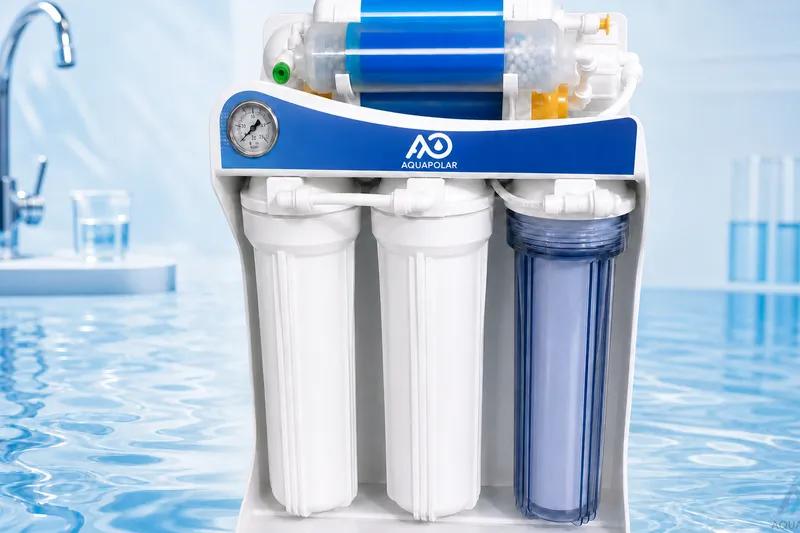
RO Machine 400GPD remains a capacity class name, not a daily gallon promise, and not a deodorant for every feed-water event. It answers a peak-volume question, not a taste-this-week question. Product: RO_400GPD.
After the storm settles
Once taste and smell return to normal, it is still worth closing the loop rather than forgetting the episode entirely. Note the date, what changed, and how long it took to settle — that small record makes the next storm season easier to read, and gives a technician useful history if a real service visit is ever needed. Households that keep no record tend to re-panic from zero every single rainy season.
What to send on Viber
- Taste, smell, or colour description, with timing relative to the rain
- Photos of the unit and filters, if safe to take
- Whether peak-hour waiting is also happening lately
- Your township, so local context can be applied honestly
Viber 09668896889 · Get Quote · Showroom · Ready stock
A short voice message describing the taste, sent the same day it starts, is more useful than a delayed and detailed essay a week later.
We will not invent lab results on this page, and no seller should promise them from a description alone. Exact next steps depend on what you describe and, where needed, on what a technician sees in person.
If a claim sounds like a guaranteed diagnosis over chat with no photos and no history, treat that as a warning sign rather than reassurance.
Related
- Hot season peak use
- 5 monsoon water checks for restaurants and hotels — hospitality seasonal checklist
- Local support vs one-time seller
- 5 questions before quotation
- Filter change fear — what to ask
- FAQ
Ready to ask before you guess?

Rain changed the water story this week. Your next message should separate service, source, and class — three different questions, one Yangon-reachable path.
Answer them in that order, and most rainy-season scares end with a filter check or a short wait — not a new machine.
Message on Viber, request a quote, or visit the showroom to ask in person.
Related products
Next step
Ready to talk through fit for your home or site? Message on Viber or request a quote.
More guides: Support guides