
Support / Guides / Home RO Checklist — Space, Drain, Power, Pressure
Right class. Wrong cabinet. Still regret.
Home RO Checklist — Space, Drain, Power, Pressure
For: Myanmar homes preparing space and services before RO install
A capacity class that cannot physically live in your kitchen is not really a capacity class.
It is a delivery box waiting to become an argument between the installer, the owner, and whoever measured the cabinet wrong. The sizing conversation can be perfect — the right class, the right peak-hour logic, the right price — and the whole decision still collapses on install day because nobody checked whether the unit and tank actually fit where they were supposed to go.
This home RO install checklist for Myanmar covers space, drain, power, and pressure — the physical, unglamorous truths that a Facebook sticker never mentions and a caption never photographs well.
None of these four things are exciting to think about before a purchase. All four are exactly what determines whether install day goes smoothly or turns into a second, unplanned conversation about compromises.
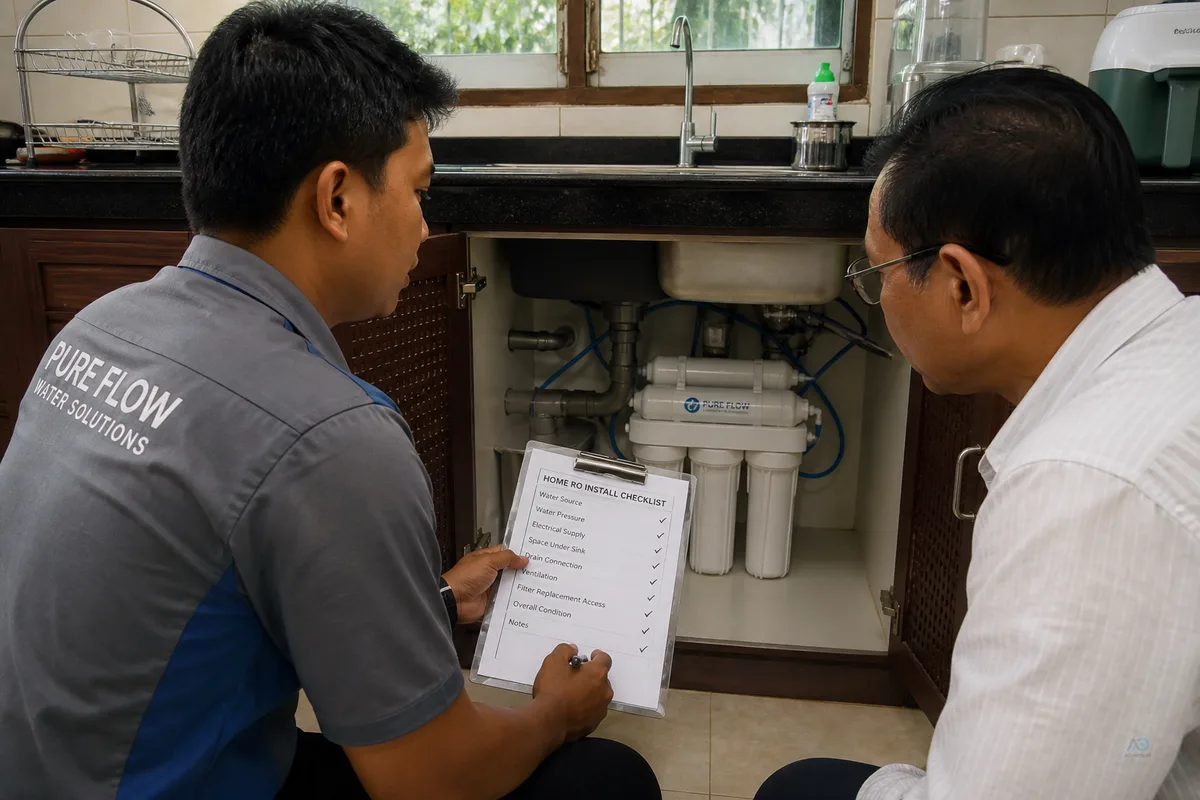
Why install reality belongs before payment, not after delivery
Buyers naturally obsess over the GPD sticker, because it is the number that is easy to compare between sellers. Installers obsess over a completely different set of questions:
- Where does the unit itself actually sit, and can someone reach it to change a filter later?
- Where does the tank sit, and does that space still leave room to open a cabinet door?
- Is there a legal drain path and a safe power point nearby, or will both need improvising?
- Does the building's pressure make even the right class feel slow anyway?
If those four questions are unknown when the order is placed, the peak-demand sizing conversation — however careful — is still an incomplete decision. See morning rush, low pressure homes, and storage tank with a bigger RO class.
WHO/UNICEF JMP tracking puts Myanmar's safely managed drinking-water coverage at roughly 60% in 2024 (SDG 6 Data / UN-Water). In that context, a home RO install is not a cosmetic upgrade — it is infrastructure a household expects to work every peak hour, in a cabinet that was actually measured first.
Buyers rarely skip these questions on purpose. They skip them because nobody mentioned they mattered until the installer was already standing in the kitchen.
A scene worth avoiding
An installer arrives with the correctly sized unit for a family's peak hour. The class fit conversation happened properly on Viber beforehand — good news. What nobody checked was the cabinet depth: the tank is four centimetres too deep for the space under the sink, and the door will not close.
Now the choices are all compromises: cut into the cabinet, relocate the tank somewhere less convenient, or delay the whole install for a different cabinet solution. None of that is the installer's fault, and none of it is the machine's fault. It is a five-minute measurement that never happened before the van arrived.
This scene repeats often enough that installers have a name for the feeling: the "right machine, wrong day" install. Everyone did their job correctly up to that point — sizing, sales, delivery — and the last unmeasured metre undid all of it in front of the client.
Checklist — space
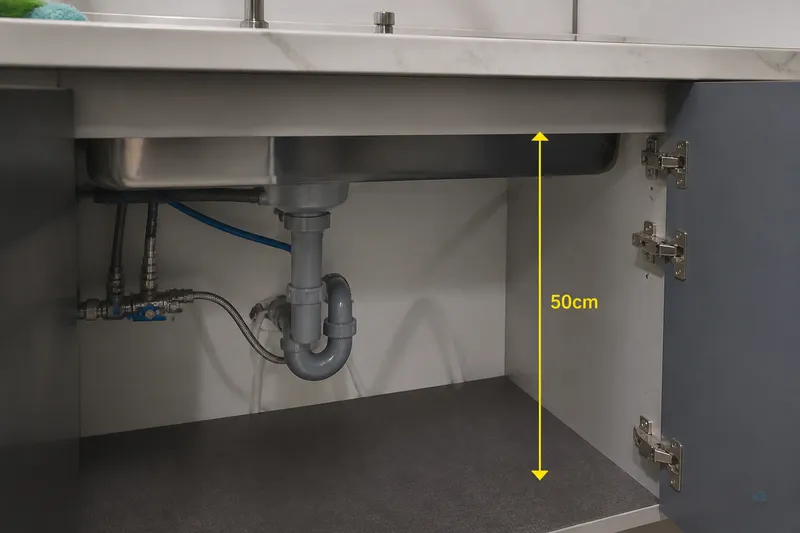
- Under-sink or alternative location depth, width, and height, measured with a tape rather than estimated by eye
- Tank footprint, plus enough clearance left over for actual service access later
- Whether existing doors and plumbing still leave room to change a filter without disassembling the cabinet
- Photos from the front and the side beat a verbal description every time — send both
Checklist — drain and power
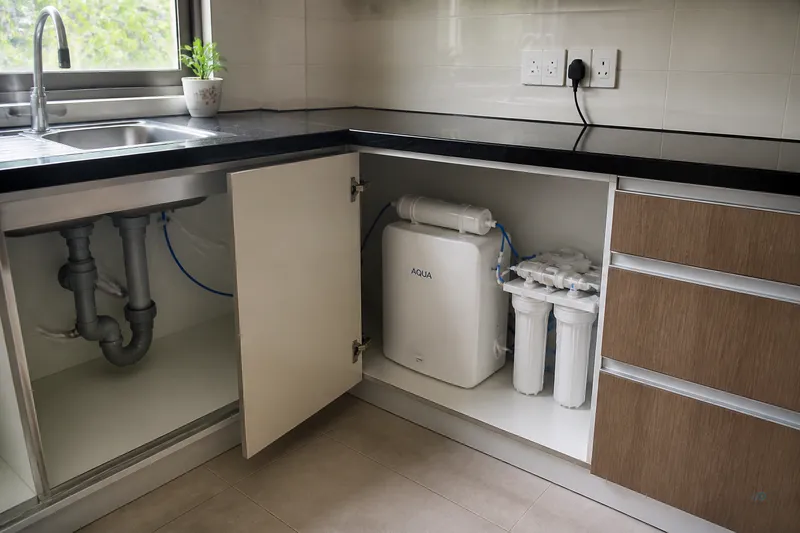
- A legal, practical drain path for reject water that does not simply dump onto a floor or into a space that will smell over time
- A power point in a sensible, safe location, with routing that does not create a trip hazard or run near water
- An honest answer to who drills, who seals afterward, and who owns the cleanup if the job is rushed to finish the same day
Emergency buys are the most common source of skipped drain and power planning — see waiting until the purifier dies for how panic timelines make this checklist disappear entirely.
A calm install week gives everyone time to do these two items properly instead of routing a cable or a drain hose along whichever path is fastest that afternoon.
Checklist — pressure and feed notes
- Are there already weak-flow complaints anywhere in the home, even ones nobody connected to the RO decision yet?
- How does the building's pump or roof tank actually behave through the day — steady, or noticeably weaker at certain hours?
- What do you actually know about the water source, and what is genuinely UNKNOWN rather than assumed?
Pressure honesty up front prevents the most frustrating outcome in this whole guide: buying a bigger class and still feeling like nothing changed, because the bottleneck was pressure, not capacity.
Apartments add their own layer to this checklist
Mid-rise apartments fed by a rooftop tank behave differently from ground-floor houses on direct municipal supply, and that difference matters for every item on this checklist, not just pressure. A roof-tank building may have pressure that varies through the day as the tank fills and drains, which changes how consistent flow actually feels at the tap regardless of which RO class is installed.
New builds can bring a different problem: plumbing that looks finished but was never tested under real household use, so a drain path that seems fine on paper turns out to be awkward once water is actually reject-flowing through it daily. Older buildings bring the opposite risk — existing pipework that was never designed with an RO unit in mind, requiring a bit more creativity from the installer to route drain and power safely.
Neither situation is a reason to avoid installing. Both are reasons to send photos and plumbing context before the visit, so the installer arrives already thinking about your building type instead of discovering it on arrival.
Checklist — people and peak, not just pipes
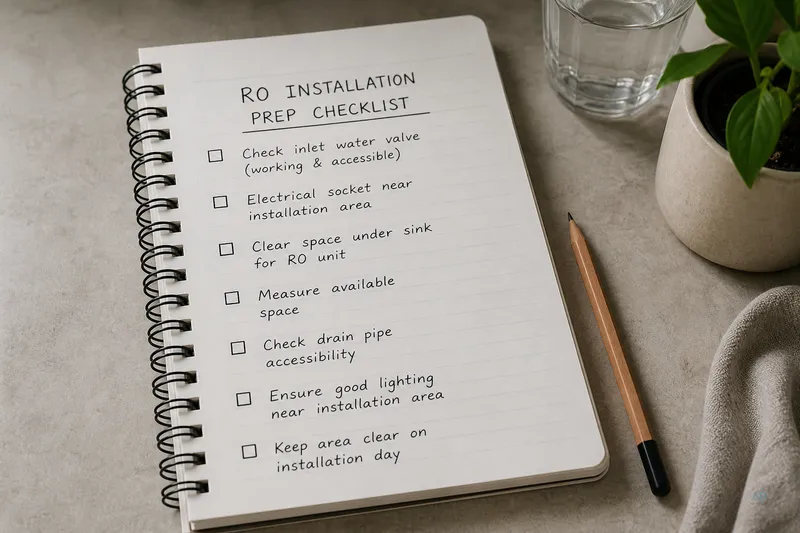
An install plan without a peak-demand answer is still only half a plan, even with every pipe and socket correctly placed:
- Who actually uses purified water in the busiest hour of the day?
- Is cooking happening on the same purified line as drinking water?
- Do school bottles, guests, or hot-season thirst change the picture at certain times of year?
See hidden water load and who 400GPD-class fits for that half of the decision. 400GPD remains a class name throughout this conversation, never a daily gallon promise.
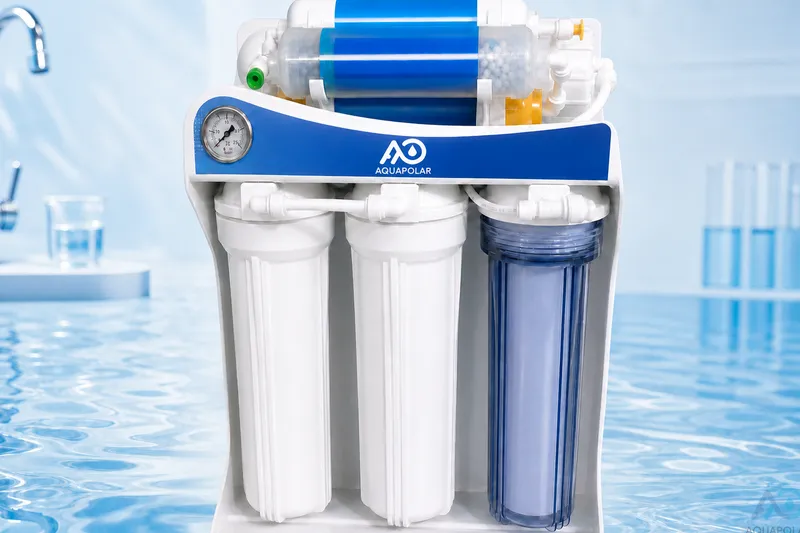
Checklist — after install, not just during it
- Who do you actually message on Viber when a filter is due? — spare parts
- Who returns to the house if something is wrong in the first weeks? — local support vs one-time seller
- Is there a showroom path if you would rather see the class in person first? — showroom
A checklist that stops at "installed" is not really finished. The after-install answers matter as much as the space measurements did.
Why "checklist first" beats "sticker first"
There is a very common ordering mistake in RO buying: pick the class from a sticker, then figure out install reality afterward. This checklist argues for the opposite order, or at least for running both conversations at the same time. A class that fits your peak hour perfectly but cannot physically be installed cleanly is not actually the right answer for your home — it is a partially right answer waiting for a second decision nobody planned for.
Running the checklist alongside the class conversation, rather than after it, means the quote you receive already accounts for your specific cabinet, drain, and pressure — not a generic version of "a home like yours."
What this checklist does not replace
This page will not tell you your exact class fit, your warranty terms, or your confirmed stock — those still require a conversation about your specific address, sent on Viber or discussed at the showroom. What this checklist does is make that conversation faster and more accurate, because you arrive with answers instead of guesses.
Send this with your quote request
- Space photos — front and side, with a tape measure visible if possible
- Township and building type — ground floor, mid-rise apartment, or compound
- Your peak window and what happens inside it
- Pressure or water-source notes, or an honest "unknown" if that is the truth
- One clear sentence: "Confirm install fit plus class talk — not just a price."
Viber 09668896889 · Get Quote · Prepare showroom visit
Sending photos and answers up front usually shortens the quote conversation rather than lengthening it.
Moving into a new apartment changes several of these answers at once — see the new apartment plumbing checklist before you assume your old flat's numbers still apply.
Related
- 5 questions before quotation
- Outgrew small under-sink RO
- Buying guide
- Showroom vs Facebook-only buy
- FAQ
Ready to fit the kitchen — not only the sticker?
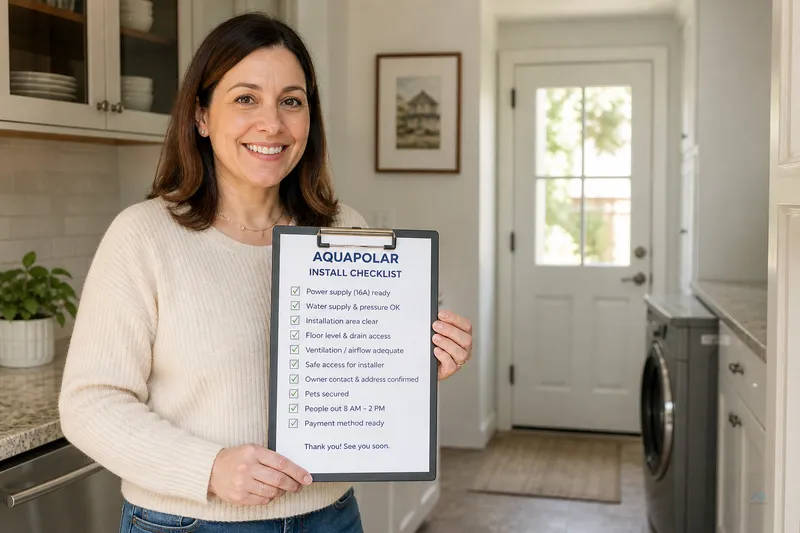
Measure the space. Name the peak hour. Then discuss the class on a Yangon-reachable path — so install day is actually about installation, not last-minute improvisation around a cabinet nobody measured.
Five minutes with a tape measure now is cheaper than a rescheduled install day later — do it before you send the quote request, not after.
Related products
Next step
Ready to talk through fit for your home or site? Message on Viber or request a quote.
More guides: Support guides